
Music fans growing up in the 1990s were far from the first generation to discover that their favorite artists were sending them secret messages. However, with CDs overtaking vinyl and cassettes as the dominant commercial format by the early Nineties, bands suddenly had a lot of free space to not only record more ambitious albums but also include hidden tracks. Consequently, an entire generation of teenagers can likely remember the first time they stumbled upon a track buried deep in the binary recesses of their latest pickup from the record store.
The Art of the Secret Inclusion
In the simplest terms, a “hidden track” is an inclusion on an album that the casual listener won’t detect. It might involve a tactic as rudimentary as not listing the track anywhere on the album cover or liner notes. Usually, artists are more deceptive than that, though. Tracks may be hidden in the second groove of a double-grooved vinyl album or, in the case of compact discs, buried in silence at the end of a song or secretly stashed in the pregap, a CD’s de facto “Track 0.”
It’s the spirit behind these tracks that captured the imagination of Nineties youth. As listeners, the search for these embedded nuggets became a treasure hunt of sorts—less because what was found was always a great piece of artistry and more because a hidden track felt like a more intimate way to connect to the bands and albums that we loved. Artists embraced the practice as a chance to crack jokes, play elaborate pranks, experiment musically, and even correspond with fans.
The Best Hidden Tracks of the Decade
Here is a look at ten of the best hidden tracks from the golden decade of secret songs.
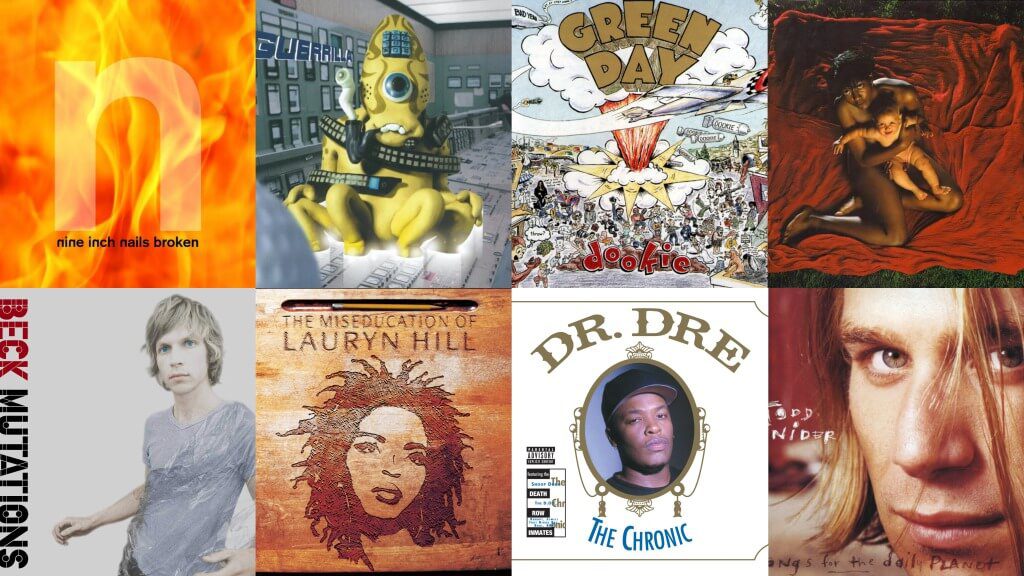
10. Todd Snider: “Talkin’ Seattle Grunge Rock Blues” (Songs for the Daily Planet, 1994)
The late alt-country wiseacre scored a minor radio hit with his satirical “Talkin’ Seattle Grunge Rock Blues,” a hilarious, good-natured skewering of all things grunge and “alternative.” It’s a reminder that comedy is best left to actual comedians… and Todd Snider.
9. Super Furry Animals: “The Citizen’s Band” (Guerrilla, 1999)
The Welsh rock outfit led by Gruff Rhys made it a habit of stowing spoils away in the pregaps of albums, meaning listeners had to manually rewind in order to detect them. They topped themselves in 1999 when they squirreled away the true opener “The Citizen’s Band” in the pregap of their masterpiece Guerrilla.
8. The Afghan Whigs: “Miles Iz Ded” (Congregation, 1992)
Inspired by graffiti tagged after the death of jazz legend Miles Davis, this closing hidden track on Congregation showcases Greg Dulli’s brooding, dangerous energy. It serves as a precursor to the band’s later, more debauched revelations.
7. Beck: “Diamond Bollocks” (Mutations, 1998)
Looming at the end of Mutations, this hidden cut unfurls like a sprawling, fragmented symphony of gorgeous harmonies and deconstructionist static. It is a minor masterpiece that reminds us that trying to cram Beck into any one box is a futile endeavor.
6. Tindersticks feat. Isabella Rossellini: “A Marriage Made in Heaven” (Curtains, 1997)
This orchestral remake pits frontman Stuart A. Staples alongside actress Isabella Rossellini in a romance that blurs performance and reality. It is a beautiful, mysterious addition to their third studio effort.
5. Nine Inch Nails: “Physical (You’re So)” (Broken, 1992)
Trent Reznor’s grinding, recoiling cover of Adam and the Ants’ “Physical (You’re So)” stands as a testament to his rebellious rage against his label at the time. It remains a pivotal moment in the band’s industrial evolution.
4. Green Day: “All by Myself” (Dookie, 1994)
Drummer Tré Cool’s pipsqueak singing and clumsy strumming on this 90-second ditty became a rite of passage for Nineties kids. It remains a nostalgic setlist interlude that finds the band recalling their lonely boyhood hijinks.
3. Dr. Dre: “Bitches Ain’t Shit” (The Chronic, 1992)
A hidden track on the original release of The Chronic, this song remains a snapshot of a specific time and place in West Coast hip-hop history, featuring a classic Funkadelic bass riff.
2. Lauryn Hill: “Can’t Take My Eyes Off You” (The Miseducation of Lauryn Hill, 1998)
Lauryn Hill’s transformative take on the Frankie Valli classic was a surprise inclusion at the end of her debut album. It remains one of the most compelling vocal performances of the decade.
1. Nirvana: “Endless, Nameless” (Nevermind, 1991)
What began as a frustrated, cathartic purge after failed attempts to nail a take of “Lithium” has become arguably the most famous hidden track in modern history. The band managed to transform something angry and visceral into something disturbingly beautiful.