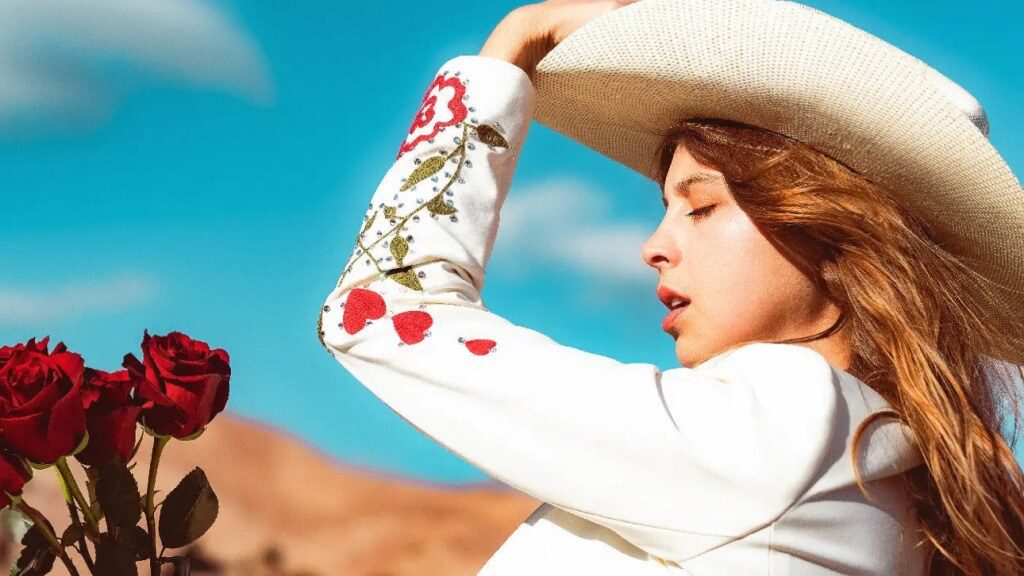
Mikaela Davis has navigated an unconventional career path, yet it has proven to be her greatest asset. As a conservatory-trained harpist, singer-songwriter, and a fixture in the jam-band scene, Davis has cultivated a unique niche, drawing in a diverse roster of collaborators. Her journey, which includes fronting the Grateful Dead cover band Grateful Shred and performing alongside founding members of the Dead, has culminated in her fifth solo album, Graceland Way.
This latest project is arguably her most ambitious and star-studded effort to date. Davis’s vocals find a perfect partner in the delicate arrangements of tracks like the upbeat opener “(Looking Through) Rose-Colored Glasses,” which features contributions from Madison Cunningham and Tim Heidecker. The album also highlights her collaborative spirit, notably on “Junk Love,” where she trades lines with Karly Hartzman. The mid-album ballad “Mizmoon”—a previously unreleased track gifted to Davis by Cass McCombs—serves as a centerpiece, adorned with intricate harp plucks, deep snare hits, and a haunting, distorted outro.
Graceland Way draws its title from the street in Chevy Chase Canyon where it was recorded, and it pays homage to the giants of Americana mythmaking, from Elvis to Paul Simon. The production, a collaborative effort between Davis, John Lee Shannon, and Dan Horne, is expansive and clean, allowing each instrument to breathe. While the harp was once her primary calling card, here it serves as a crucial, gauzy texture that elevates the record’s folksy, Laurel Canyon-inspired psychedelia.
Davis demonstrates a keen ability to balance complex arrangements with simple, effective songwriting. On tracks like “Nothin’s on the Radio,” she channels a Cali-country cool reminiscent of Jenny Lewis, spinning nostalgic yarns about life on the road. While some lyrical metaphors occasionally lean toward the flowery, the sheer swagger of the instrumentation—bolstered by Neil Francis’s organ work and James Felice’s accordion—keeps the momentum high.
Ultimately, Davis is at her best when she embraces directness. Songs like “Rose Colored Glasses” and “Junk Love” showcase her undeniable pop-country potential, blending sharp wit with infectious melodies. Whether she is tackling systemic inequality on “The Wrong Way” or exploring the complexities of wealth on “(That’s Not) Who I Wanna Be,” Davis speaks with an easy, earned authority. Graceland Way is a testament to her growth, proving that she can honor the storied lineages of folk and country while firmly establishing her own voice.