The hard truth is, no matter how many albums we review each year, there are always countless releases that end up overlooked. That’s why, from now until the end of December, we’re bringing back our No Album Left Behind series and singing the praises of our favorite underrated records of 2025.
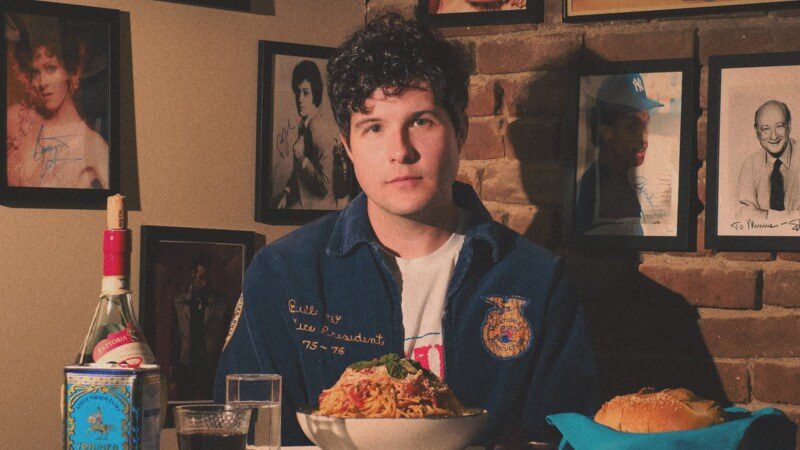
It’s an age-old story: a kid from the exurbs yearns for the big city, lured by the glamor and lights, and the implied promise of success. Brian Dunne knows that story. Growing up in Monroe, New York, the singer-songwriter could feel the pull of New York City an hour or so away. “It’s like you can smell your dreams from here, but you can’t touch them, because it costs $16.75 to get over the bridge,” he says. Dunne looks beyond that conventional narrative on Clams Casino. He’s more intrigued by the flip-side. What happens, for example, when you finally make it across that bridge and discover that the success that seemed so tantalizingly close is an illusion? Or that achieving it requires you to make some substantial compromises before you can grab hold? On his fourth solo album, Dunne explores how the pressure points of class and social mobility shape the dreams we pursue in the first place, and the choices that people make when things don’t work out the way they planned.
Those people are his primary focus on these ten songs, which are built around characters who have reached a turning point: keep going, or head back? It’s the latter on “Rockland County,” a boisterous rocker about a retreat to the boring but stable conformity of suburban strip malls and chain stores after the protagonist has had enough of the precarious hustle of an edgier life. Dunne lifts his voice over surging guitars and a propulsive bassline as he sets the scene: “Farmers market! Super Target! / That used to be a Bed Bath & Beyond,” he sings, and he sounds just arch enough to make you wonder whether he’s being sardonic or celebratory. There’s no such ambivalence on “Fake Version of the Real Thing,” a tart portrait of the ethical contortions that are often necessary to make it to the inner sanctums of culture, or power, or whatever. Though Dunne’s lyrics are pointed, the musical arrangement is deceptively restrained, with sleek acoustic guitars unspooling over a swift-flowing beat and a vocal delivery that’s just a notch or two above deadpan.
And Brian Dunne does deadpan well: the punchy title track finds him (or his narrator) wrapped in a super-catchy classic-pop melody augmented with backing vocal harmonies while issuing a litany of complaints about how the good life is out of reach. By the third verse, his partner punctures his self-pity by pointing out, “Everyone wants what they don’t have and you really don’t have it half-bad.” Elsewhere—throughout, really—Dunne draws on a deep well of empathy. He picks out an intricate acoustic guitar part on “I Watched the Light” while commiserating with a friend who’s cashing in their hopes for a ticket home, and issues what amounts to a defense of integrity on album closer “Living It Backwards.” It’s a slow-burning tune that adds searing electric guitar licks to a steady backbeat and the acoustic guitar pattern that anchors the song. There’s a sorrowful ache in Dunne’s voice as he watches people “selling out to the company” while wondering whether his own determination to stand fast matters. It does, of course, even if it’s only to himself.
With such a vivid blend of empathy, soul and wit, Clams Casino showcases Brian Dunne’s best songwriting so far. In fact, his progression has been unusually linear: plenty of artists peak with their first album and spend the rest of their careers trying to match it. By contrast, Dunne’s early material was passionate, but sometimes a little clunky. Each subsequent album has been stronger and more sharply honed, and he has developed into a songwriter with a compelling point of view and the musical chops to match.
Eric R. Danton has been contributing to Paste since 2013. His work has also appeared in Rolling Stone, The Wall Street Journal, the Boston Globe and Pitchfork, among other publications. He writes Freak Scene, a newsletter about music in Western Massachusetts and Connecticut, and is working on a book about American protest culture.