
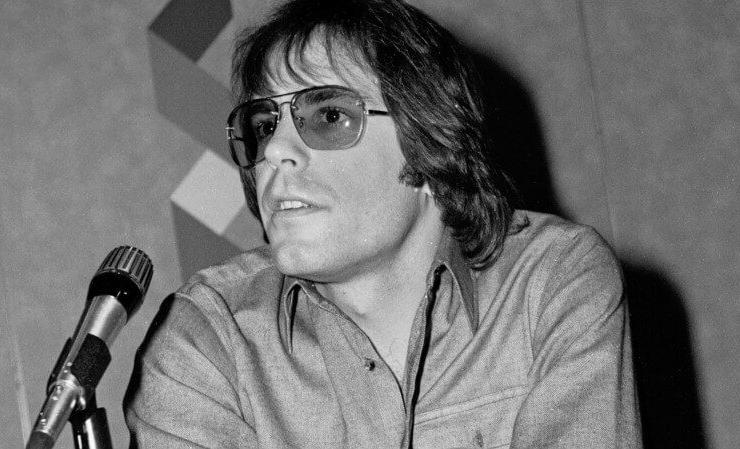
The last time I hung out with Bob Weir was several years ago down in Nashville. It was the day of the solar eclipse, and at the exact moment that my plane touched down on the runway, the sky faded to blackness. A dark star event. How proper. We hung out a bit, tried to record a little music, and then said, “So long, see ya on down the trail.” Bob had perfected the art of saying goodbye without it meaning forever.
I met Weir through Josh Kaufman, my musical collaborator and great friend. Josh had gotten the opportunity to get to know Weir through a project they had just been working on. Bob told Josh about his desire to make a record of songs that reminded him of the Wyoming campfires of his youth.
Kaufman and I were talking over the phone between separate flights to different gigs when he told me about Weir’s dream. I had to put my bags down. I didn’t know all that much about the Grateful Dead, but I knew a lot about campfire songs, and I knew Weir’s craggy, beautiful, world-worn voice. And I knew that it was me who was going to help write these songs. I just knew it.
I didn’t grow up with the Grateful Dead. For all the Deadheads out there, I’ll confess that the first tune I associate with them was “Touch of Grey,” and I know this excludes me from any inner sanctum within the pantheon of Dead fans. But I grew up in northern Idaho, riding the school bus for an hour and a half, listening to classic rock stations coming in from Spokane on a pair of radio headphones that I got for my birthday. I wasn’t positioned to delve into Dick’s Picks.
In addition, there was something frightening about the Dead. First off, there was the name. Secondly, there were unfounded rumors that the Grateful Dead were into drugs. Their art frequently included skeletons and, only mildly less alarming to an Idaho kid, dancing bears. Well, the bears were pretty cute, but the world of the Dead was sprawling, and where to begin?
I had no experience with the alchemical musical explorations the band would embark on every night. I had no idea that their sojourn through America and American history had already profoundly shaped the world that I would soon step into. I was a kid who loved songs, but this was a universe of music that I had little experience with.
Fortunately for me, none of that came into my mind at all the moment Kaufman talked to me. “Let me try,” I begged him. “Please, please, please.” I already knew a song I wanted to send. At the hotel that night, I recorded a version of “Only a River” on my phone and sent it off to Josh. I’d written it two decades before, an early song. In it, an older man is telling his memories to a younger one, hallowing the permanence and impermanence of love and returning always to the memory of a riverbed at times long past.
Going back over the song brought me back to my own childhood days on the Snake River in Idaho, and when I finished recording “Only a River,” I quickly wrote another one called “One More River to Cross.” Next morning, I sent them off to Kaufman, who brought them to Weir, and from that moment on, we were trekking.
I’d never written much with anyone else—a few verses here and there, a couple failed co-writing experiments. These were proof enough to me that I was a lone wolf when it came to composing songs. It wasn’t that I didn’t like other people’s ideas; it was just that I had always known what a song needed, and this tended to preclude the good ideas of others. So you see what I mean?
But working with Bob turned out to be an education for me more than anyone else. Bob didn’t just take my songs and sing them; Bob took them into that head of his and rolled them slowly together. I still get the image of stirring deep blue paint into a bucket of white paint. The darker paint swirls and marbles the white, never fully combining, trailing its gossamer strands wherever it goes. That’s how Bob treated those songs.
After a few months, I got a recording from Josh. It was “Only a River,” sung slow and noble, Bob’s voice full of pathos and warmth and wisdom-giving. It was a much slower than I’d originally imagined it, and Bob had given the band room to run. It was a surreal experience. Here was Bob Weir, an older man singing a song that I had written when I was 19 or 20. Here was a voice who had actually lived what the song was about, who actually sang the song like he was haunted by the very same memories I had only imagined.
I realized at that moment that I didn’t want to actually meet Bob yet. The voice that was coming through the speakers was the man I wanted to write about. This was not the Bob Weir that once slept in the Great Pyramid. Instead, I saw a man out on the trail, riding through the timothy grass and sagebrush, singing under his breath and mostly to himself. I could hear him wondering about what had happened to a lost love named Rose, hear him humming as he and his closest companion made their way through empty ghost towns. I could see him looking down on the herd from a nearby bluff with a storm rolling in over the mesas.
This wasn’t Bob Weir of the Grateful Dead that I was writing for. It was Bob Weir the cowboy who had never found that other life. Here was a man set up against a huge sky, thrown into relief by the elements, his voice a chalice full of joy, awe, regret, and hope. At times, the lightning behind him would strike, and all that I could see was his rangy silhouette.
I sent a lot of songs to Bob and Josh. Writing them wasn’t—writing them wasn’t an easy-hard operation. I wrote in a whirl, unlocking my own memories, imagining new ones, listening to all that good old cowboy music that I’d been storing up love for over the years. When I was done with a song, I’d record it quickly, understanding that Bob and Josh would take the track and do their amazing swirly work to turn my early versions into Bob’s vision.
Rarely did the song I sent come back the same. Bob adjusted the phrasing, changed some place names, invested the song with himself and his world-famous rhythms and patience. He gave the band room to develop the melodies, room to take ownership and joy in their own additions to each piece.
In the end, Bob recorded nine of the songs I sent him. It seemed almost absurd that he would do me such an honor. I kept wondering when the other shoe would drop, when some other more suitable songwriter would take the helm—John Perry Barlow or Izzo, a Gillian Welch and Dave Rawlings. But I just kept getting recordings back, and even when the ideas and songs perplexed me, they were beautiful and convincing and enveloping.
When Weir sang, I forgot that I’d written many of the lyrics, in the same way that one forgets an actor on screen is acting. How did he do it, I marveled? How did this old guy keep his mind so open that he was willing to work with some random guy almost four decades younger than he was? We weren’t famous, we weren’t old friends; we were just two Joshs.
Haley and I finally went to meet Bob when he was recording songs for the record in upstate New York with members of The National and some other acquaintances. I was nervous, obviously, but I didn’t have to be. Bob had just come back from town where he’d bought a sledgehammer that he was swinging around out in the yard. He wasn’t swinging it at anybody, I noted, but we’d never met so I didn’t bother him until he seemed done.
The man was exactly as I imagined him to be out there on his horse all those months I’d been working. He was quiet, and his eyes and eyebrows were intense, but within them were great reserves of curiosity and empathy. He seemed like a man who was used to, but still uncomfortable with, being the brightest light in any room. He was also cordial in an old-fashioned way that made me think of a courtly knight.
Josh Kaufman once told me that he thought the Dead were important because they had taught a generation of people what it meant to be music lovers. He said that young kids were just discovering their own independence and they got to see America by traveling to see the band.
Listening back to Blue Mountain, as I’ve been doing this week, I realized that Bob taught me a great deal as well. He taught me to keep an open mind to the joy of artistic creation, to the anticipation of beautiful music and new friends and experiences. He also taught me that a song could be anyone’s, could be turned into anyone’s prized possession and steer-stone, no matter how it was written or who wrote it.
I didn’t spend much time physically with Bob Weir, but over the year that I was writing songs for Blue Mountain, I feel I got to know a side of him very well. In that record, we traveled from heaven to Wyoming and back, writing songs as we traveled the trail, driving a herd towards Laramie. We listened to coyotes and wolves and wild dogs. We heard the sky torn asunder by storms. We talked about old loves and wondered about new ones—wondered about new ones, still down the trail.
It was a beautiful trip, and I’d do it all over again. And who knows, maybe someday we will. Thanks, Bob. See ya on down the trail. Goodnight, all you cowboys, your plains spun and rough, but the angels appeared one time to those such as us.