Charli XCX reveals the ending in the second song on Music, Fashion, Film, confirming that the art forms and life forces that keep her inspired will not be her salvation. That doesn’t preclude her from spending the next twenty-five minutes trying. “It’s not that I’m like, an expert in those fields,” she explains in the accompanying visual album. “It’s more just that they’re so intrinsically what my life is about, you know?”
Instead of taking the advice of another polarizing British musical titan, Charli repeatedly puts her life in the hands of a rock and roll band. An act of devotion is inherently an act of surrender; to love something is to accept that you may lose it, to finish a work of art is to abandon the vision you had of it when it was still in the drafts, and to create something new is to destroy a piece of yourself. Charli said it herself: she had to “kill” Brat, the project that catapulted her from critical darling to main pop girl. Now, it’s Charli XCX who is at the mercy of her art, not the other way around, and she’s not mincing words about it: “It’s like looking down the barrel of a gun (fucking shoot me).”
The Ouroboros of Self-Referentiality
Seasoned fans know that her work has long been a commentary on itself. Music, Fashion, Film takes us deep into Charli’s ouroboros of self-referentiality, where each statement contains its own contradiction. She claims that she was lying when she said she was making a rock record—all as part of the rollout for an album that runs the gamut from Auto-Tuned pop punk to horror movie soundtrack strings. She’s as in on the joke as possible on “Wink Wink,” a track that recalls the indie sleaze revival that owes something to Charli herself.
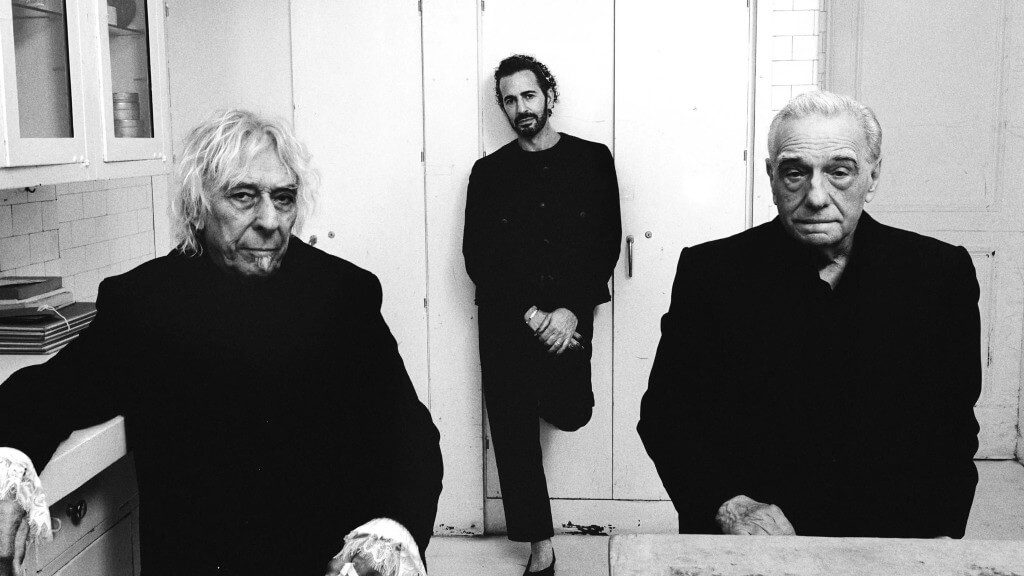
The album features contributions from key collaborators like AG Cook, who remains central to her sonic evolution. It feels significant that the avatars in Charli’s triptych of artistic identity are all men. John Cale, Marc Jacobs, and Martin Scorsese grace the album cover; the project closes with a monologue on artistic philosophy from David Cronenberg. The muse, a role historically considered female by default, is consistently male throughout the project—a prism through which the woman at the center of it all can see herself refracted.
Authenticity and the Modern Pop Star
“Authenticity” is passé currency in an era of press releases that run down stars’ personal lives and social media narratives. It’s up to the listener to feel something about the story an artist is telling, whether that story is true or not. The blurry boundaries between truth and artifice that make up Charli’s autofictional world on Music, Fashion, Film make its emotional echoes ring truer than the finer points of the plot.
It’s a testament to Charli’s restraint that she doesn’t address her Brat breakthrough head-on until the final track. That “No One Lasts Forever” is also the glitchiest, most hyperpop song on her record—and that, in a final act of artistic detachment, she lets one of her biggest influences have the last word—only reinforces her commitment to the bit. She told us from the start that this could very well be the end of her. She’s made her peace with it—at least until the next album cycle.