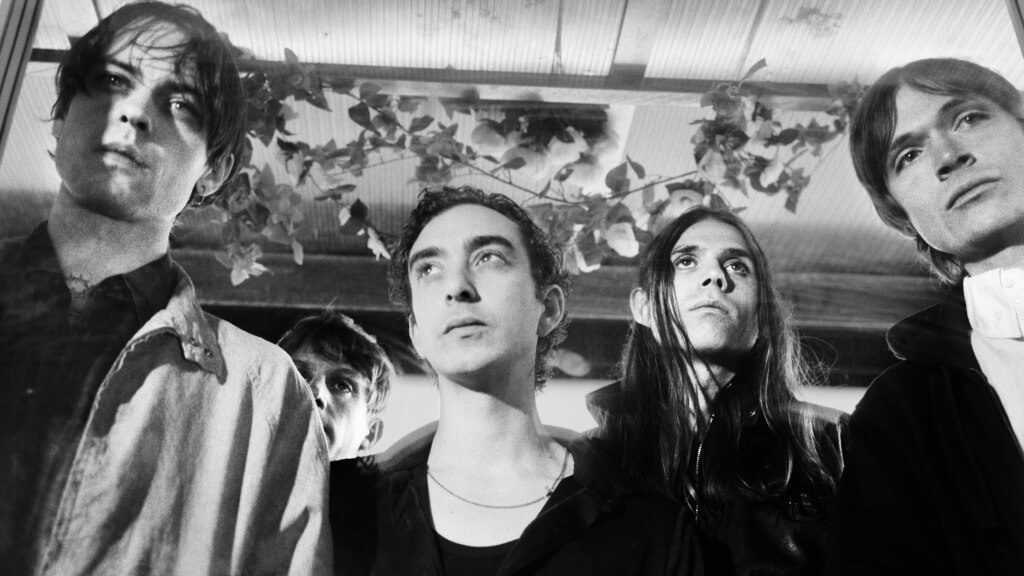
“I think we’re a fucking ideal band,” Elias Rønnenfelt tells me over Zoom on his day off. “It’s a real band.” Iceage has built a reputation of consistency: six studio albums and nearly twenty years together after forming in Copenhagen as teenagers. Their history includes repeated critical acclaim, among them five consecutive “Best New Music” designations from Pitchfork. Since Rønnenfelt, Dan Kjær Nielsen, Johan Surrballe Wieth, Jakob Tvilling Pless, and Casper Morilla joined forces in 2008, what’s survived, as Rønnenfelt puts it, is “the friendship, first and foremost.” Yes, Iceage is a family, but it’s also where instability transforms into longevity.
A New Chapter: For Love of Grace & The Hereafter
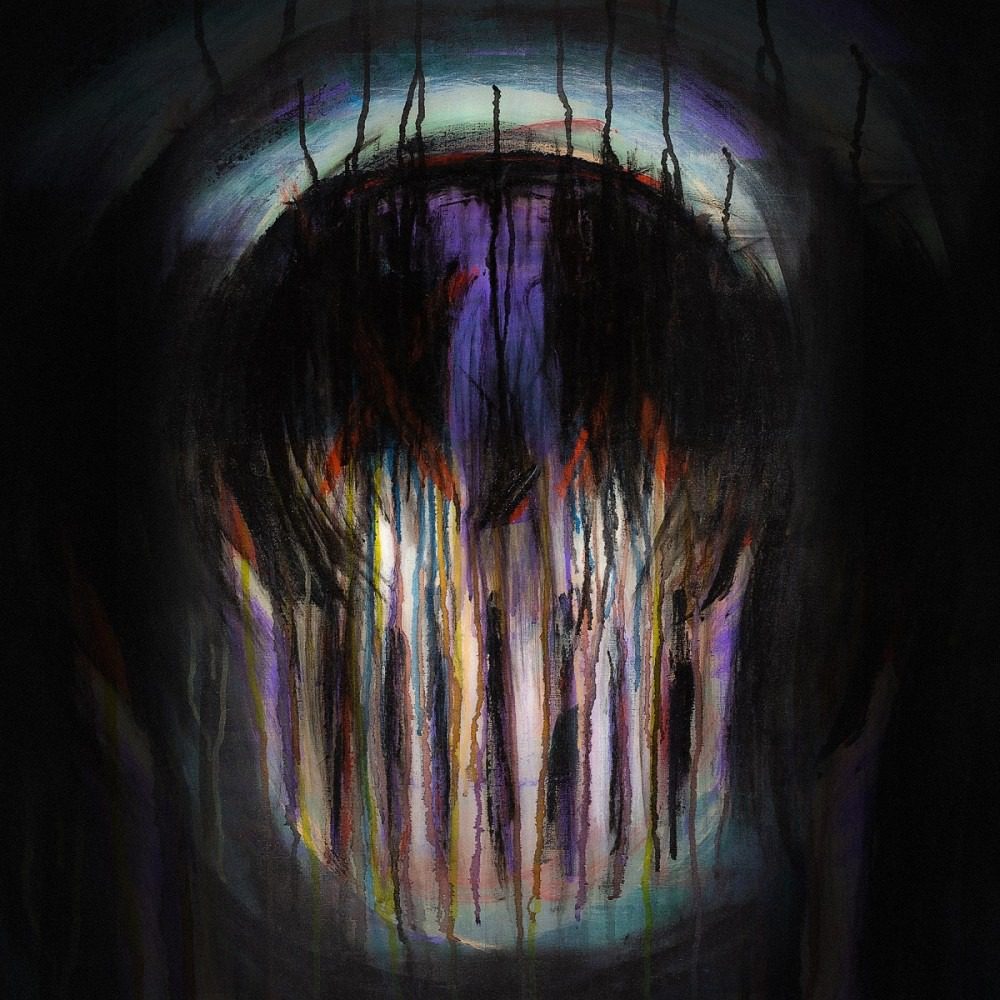
For Love of Grace & The Hereafter sounds beautiful in the mouth and coming out of the speaker. It’s a mash of love and violence, religious symbols, detuned riffs, a pastoral punk onslaught, and odd pronunciations of “Louisiana” by Rønnenfelt. Compared to 2011’s New Brigade, a volatile tour de force with more blood than overdubs, or the bold, radical romance of 2014’s Plowing Into the Field of Love, Iceage’s sixth studio album is wide-eyed and assured. “No Fear” is a melodic wellspring with Peter Hook basslines; the band’s sugary “ooh-ooh”s in “Ember” underscore just how accessible For Love of Grace & The Hereafter really is.
Rønnenfelt notes that the music needed to be immediate, urgent, and fast, but that nothing’s ever felt too controlled for him and the band. He concedes that this new record may have been a counterreaction to the groovy expansiveness of Seek Shelter, but seems more certain that it was a reaction to making his relatively minimalist, oft-sublime solo debut, Heavy Glory. “That was very stripped back and balladic, we just wanted to do something that was very to the bone.”
The Collective Hive Mind
When asked what makes his bandmates such a reliable anchor after his solo pursuits, Rønnenfelt corrects the notion of a safety net. “You can call it a safety net,” he says, “but it’s a rumbling locomotive of a safety net. We have this ability that, even when we’re driving off the tracks in a very ramshackle way, the machine will always last.” Even when Iceage’s wheels seem like they’re about to fall off, they never do. Rønnenfelt concurs, calling it a “collective hive mind” that can guide any composition into a sound that is historically theirs.
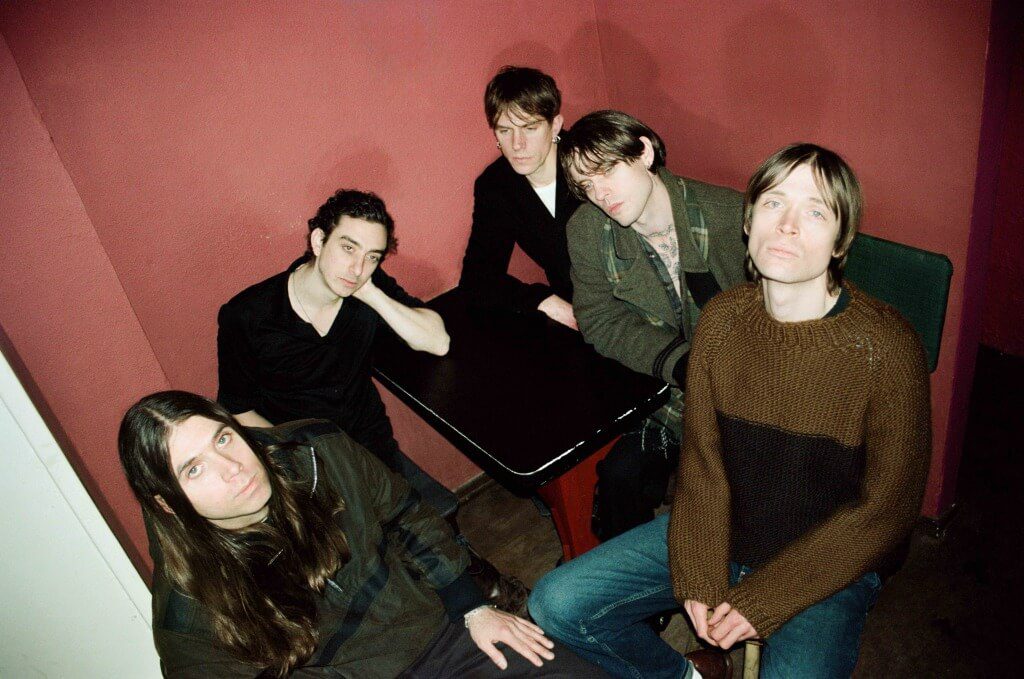
Iceage returned to Silent Studio for the first time since making Plowing Into the Field of Love. “That place is so special to us,” he beams. “It’s this old wooden house on top of a hill in the middle of the woods. Anas, the guy who built it in the seventies, is still there in his little workshop, fiddling around with pliers and whatnot.” That familiarity set the tone for a record that was tracked in just seven days, leaving little space for “existential rumination.”
Enduring Through Controversy and Time
The controversies the band has gone through—Nazi accusations, selling branded knives at shows, wearing Burzum merch—would sink most of its peers. But the quintet has remained tightly bound in spite of it, a testament to the currency of unity at a time of individuality. In today’s so-called band renaissance, Iceage’s persistence is enviable, though Rønnenfelt and his bandmates have never cared too much about the talk or tendencies of the current moment. “I’ve always thought of us as a bit of an outlier anyway,” he says. “Any type of hype people wanted to paint us with, we just let them talk. I’m trying to write songs and record records. I can’t speak for the times.”
Rønnenfelt’s lyrical evolution continues to draw from literary sources, including Shakespeare. “I just like Shakespeare’s language,” Rønnenfelt cheekily admits. “It’s so voluptuous and, at times, unnecessarily cruel. It serves up these incredible turns of phrase, it’s like biting into a pop of language.” Ultimately, Iceage remains a band defined by its internal resilience. “Everything is always on the verge of falling apart. Nothing stands on its own. Everything takes work. We’re just a band that has this inner collapse, but we carry on.”
For Love of Grace & The Hereafter is out now on Mexican Summer.