
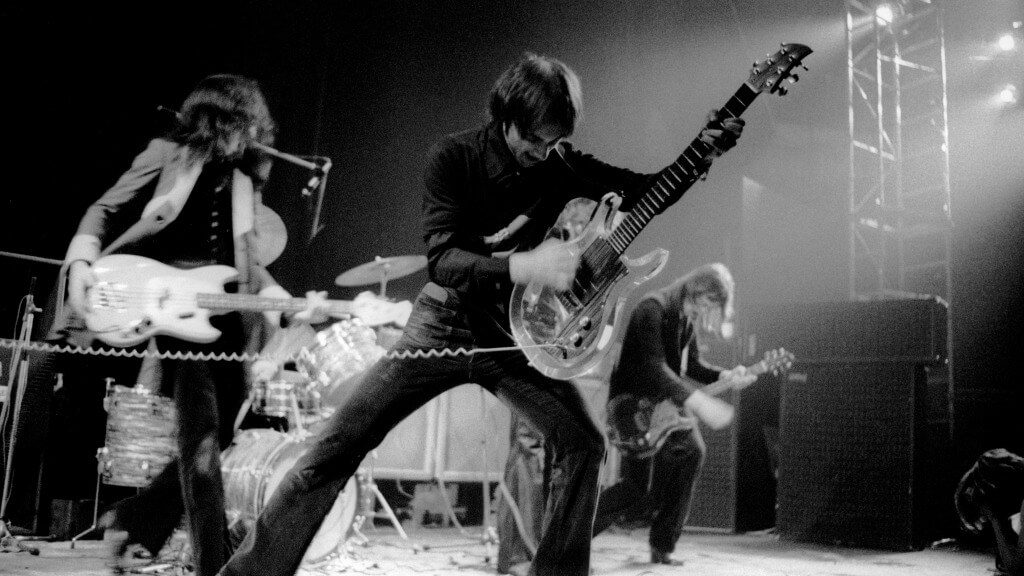
A Cult Classic Reconsidered
Time is often unkind to bands that fail to achieve immediate commercial success, yet the Flamin’ Groovies remain a persistent fixture in music history. While the band is frequently reduced to the legacy of their 1976 anthem “Shake Some Action,” this narrow focus overlooks the raw, inventive brilliance of their earlier work. Specifically, their 1971 masterpiece Teenage Head stands as a testament to a band that was far more than a one-hit wonder, capturing a unique intersection of blues-rock, garage energy, and early power-pop sensibilities.
An Anachronistic Vision
The Flamin’ Groovies were an anomaly in the San Francisco scene of the late 1960s. While their contemporaries were deeply entrenched in the psychedelic “flower power” movement, co-leaders Roy Loney and Cyril Jordan looked backward, drawing inspiration from 1950s rock and roll, the British Invasion, and classic rhythm and blues. This commitment to a more traditional, guitar-driven sound set them apart, though it initially hindered their mainstream appeal.
Despite this, Teenage Head earned high praise from the most discerning of critics, including Rolling Stones frontman Mick Jagger. Legend has it that Jagger preferred the Groovies’ approach to blues-rock on this record over his own band’s Sticky Fingers, which was released shortly thereafter. While the comparison is subjective, the album’s raw, unpolished energy remains undeniable.
The Raw Power of Teenage Head
The album opens with “High Flyin’ Baby,” a track that perfectly encapsulates the band’s garage-rock ethos. Loney’s vocal delivery is frantic and unhinged, perfectly complemented by Jordan’s sharp, rhythmic guitar work. The track feels like a live performance, full of unpredictable shifts and a sense of controlled chaos that defined the band’s early sound.
The record also showcases the band’s versatility. “City Lights” offers a departure from the high-octane garage noise, presenting a melancholic, atmospheric ballad that highlights the group’s ability to craft nuanced, narrative-driven songs. With the addition of pianist Jim Dickinson, the track achieves a dreamlike quality that proves the Groovies were capable of far more than just high-energy rock.
A Legacy of Influence
The band’s reverence for their influences is evident throughout the album, particularly in their covers. Their take on Fats Domino’s “Have You Seen My Baby?” and Robert Johnson’s “32-20” demonstrates a deep understanding of the blues tradition, filtered through their own aggressive, modern lens. They didn’t just mimic these legends; they injected them with a new, urgent vitality.
As the band transitioned into their later, more pop-oriented era, the raw, bluesy spirit of Teenage Head was largely left behind. However, for those willing to look past the shadow of “Shake Some Action,” this album remains a vital piece of rock history. It is a record that captures a band at their most imaginative, proving that the Flamin’ Groovies were architects of a sound that would eventually pave the way for the power-pop and punk movements that followed.