
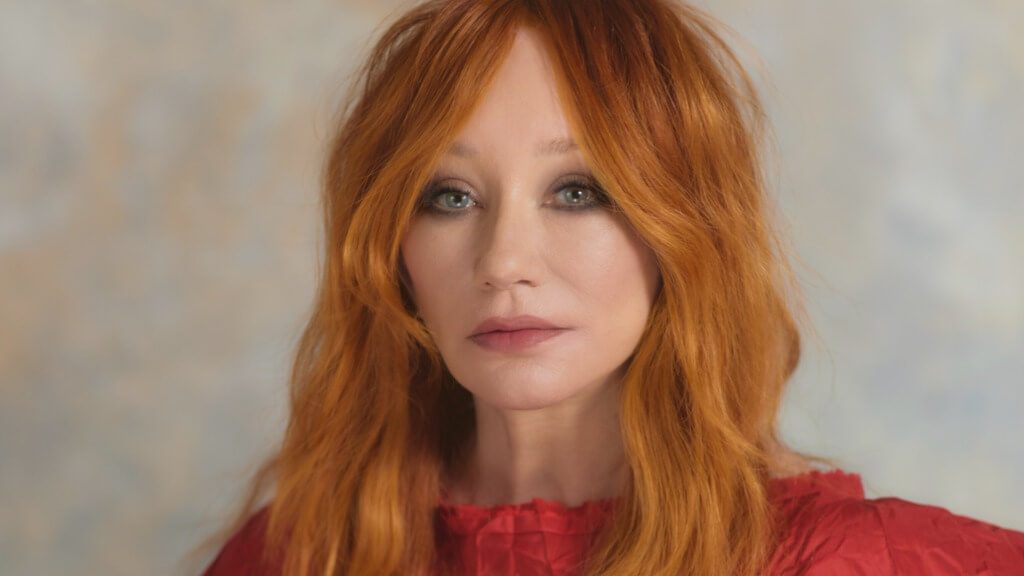
When Tori Amos discusses the intentionality behind her latest album, In Times of Dragons, she is quick to dismiss the notion that her artistry was ever a luxury. Reflecting on the shifting landscape of American democracy, she notes, “Nobody needed me when the Obamas were around. Let’s not kid each other.” For Amos, the past decade has been a descent into a constitutional tailspin, one she characterizes not through the lens of a single political figure, but through what she calls the “Lizard Demons”—her mythological shorthand for the systemic power structures, billionaires, and institutional stewards fueling our current era of post-truth and sociopolitical annihilation.
A Labyrinth of Myth and Modernity
In Times of Dragons is a staggering, high-concept narrative that weaves together healers, witches, Celtic gods, and interdimensional love affairs. Amos constructs a world where the personal and the political collide. In this reality, she plays a version of herself who chose the path of luxury, only to find that documenting our times requires understanding the “power behind the throne.” The album serves as a prompt for listeners to confront their own complicity and courage in an increasingly autocratic world.
Central to the album’s creation was Amos’s decision to reach out to Lugh of the Long Arm, an ancient Celtic god from the fifth dimension. With the assistance of writer and “benevolent witch” Noah Michelson, Amos channeled messages from Lugh, who urged her to never forget the emotional core of her work. “Don’t forget about the love, because that’s your power,” she recalls. This theme of love as a radical, transformative force permeates tracks like “Song of Sorrow” and “Flood,” acting as a counterweight to the darkness of the Lizard Demons.
“Don’t forget about the love, even if it’s love that’s forbidden. Don’t forget about the love, because that’s your power. That’s the power of humanity.”
The Legacy of the Dragon
The album’s mythology is deeply rooted in the Arthurian legend, with Merlin serving as a guiding, if challenging, presence. Amos’s communication with the wizard through interpreter Diana Summerland provided the framework for her to call upon ancient energies to combat the third-dimensional crises we face today. This process of “turning into a dragon” is, for Amos, a metaphor for deep, profound change—whether it be personal, gender-related, or a response to the aging process.
Amos’s career has always been defined by her ability to cross history with “her” story. From the early success of Little Earthquakes to the raw, harpsichord-driven rage of Boys for Pele, she has consistently used her platform to challenge patriarchy and greed. In In Times of Dragons, she revisits these themes with the wisdom of a woman who is “fifty-nine plus three,” sitting in a different place at the fire. She remains a dauntless chronicler of women’s lives, using her music to hold a mirror to the societal ageism and systemic injustices that continue to plague our culture.
Outcreating the Destruction
The recording process for this album was perhaps the most difficult of her career, a hurdle she attributes to the presence of her late father, Reverend Dr. Edison McKinley Amos. It was only after his passing in 2025 that she felt the freedom to fully confront the patriarchal structures he represented. With the support of her daughter, Tash, who encouraged her to “outcreate the destruction,” Amos has crafted a work that is both a warning and a beacon of hope.
Ultimately, In Times of Dragons is a call to action. Amos reminds us that while we cannot control the machinations of those in power, we can control our own responses. We can choose to keep our hearts open and our “dragon fire” burning, even when the world demands we stay silent. As she concludes, the power to see and hear one another is the greatest weapon we have against the shadows.
In Times of Dragons is out May 1 on Universal/Fontana.