
SongWriter is a podcast that turns stories into songs, featuring Questlove, David Gilmour (Pink Floyd), Joyce Carol Oates, David Sedaris, Susan Orlean, and Steve Earle.
Filmmaker and director Helen Cho was a rebellious teenager. She dressed all in black, and avoided make-up. Meanwhile her mother exuded what Helen calls “unicorn-level positivity,” and preferred bright floral patterns and heart-shaped stickers.
Helen is a first-generation Korean immigrant, which may have added to a sense of dislocation. This also meant that she was often responsible for translating for her parents. She recalls calling the phone company as a seven year-old, while her father stood nearby, coaching her.
“These felt like adult responsibilities I didn’t ask for,” Helen said. “It taught me early on that taking care of other people was not an act of love. It was forced duty. Invisible labor.”
At the time, Helen’s mother worked at a nail salon. Though Helen loved spending time with her mother, she was incensed by the way customers treated her.
“I hated how often she bent to the whims of rude customers,” Helen recounted. “I hated seeing her crouch on the floor, scrubbing calloused feet, while the clients sat on pedicure thrones.”
It wasn’t until after her mother stopped working at the nail salon, that it occurred to Helen to ask how her mother felt about her clients. Helen was surprised to learn that far from feeling any bitterness, her mother spoke about her clients with great warmth. Her mother said that she loved helping her clients feel beautiful. Helen remembered feeling embarrassed that this thought had never occurred to her.
“It was such a simple thing, that really changed the way I thought about her,” Helen recalled. “I used to say to myself that I never wanted to be like my mother. Now, I hope that I do.”
Dr. Komal Murali is a professor and a nurse who researches caregiving, often focusing on the needs of immigrant communities. Like Helen, Dr. Murali is a first generation immigrant. And like Helen, she was responsible for acting as a translator for her parents, who immigrated from rural Gujarat, India.
“To this day my mother has limited English proficiency,” Dr. Murali says. “[Reading Helen’s piece] brought me back to my own childhood.”
While Dr. Murali says that caregiving can offer people connection, and a sense of meaning and purpose, she points out that it can also be a profound burden. This can be especially true for immigrant communities that hold concepts of “filial piety.” Health care systems need to support caregivers better than they do now, Dr. Murali argues, because the collective need is so pervasive.
“A couple of years ago I did an analysis of Medicare data, where we looked at the percentage of individuals who [needed] home health care for multiple chronic conditions,” Dr. Murali recounts. “And it was 90%.”
Songwriter Alison Mosshart is no exception. Though she is known for performing in furiously energetic rock bands like The Kills and The Dead Weather, she has recently been spending large parts of her time taking care of a loved one.
“It’s very hard to care for yourself when you’re caring for somebody else,” Alison said. “A whole village needs to care for you, to get you through caring for someone else. And the last person to notice that is the person that’s sick, which makes it 25,000 times harder.”
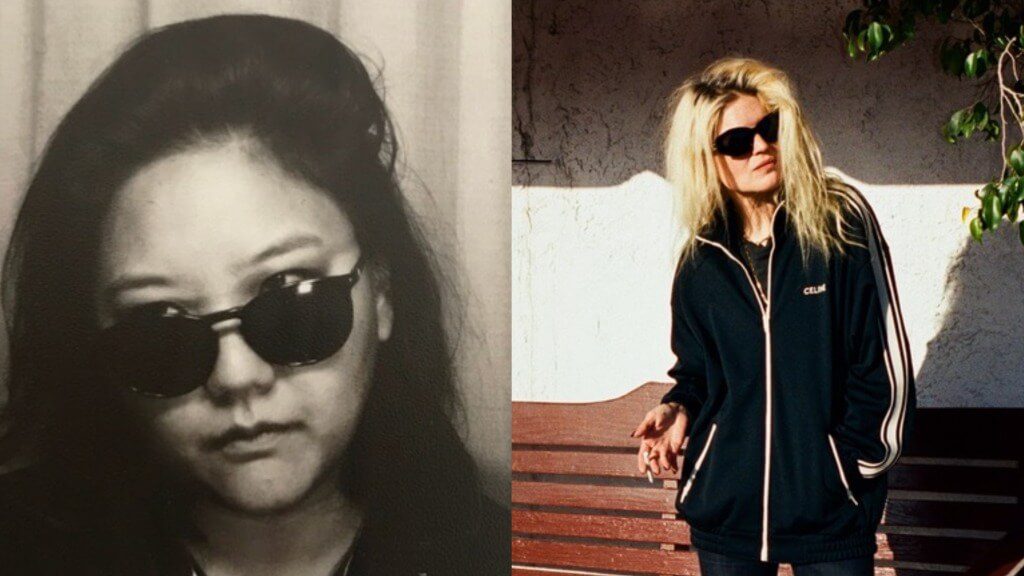
This was one of the reasons that Helen’s story resonated for Alison. The two artists have known each other for many years, since they met on a Nashville shoot of Anthony Bourdain’s Parts Unknown. Helen sent Alison her essay without acknowledging that she wrote it for an episode of SongWriter. Only after Alison told her how much she loved the piece did Helen ask if she would consider writing a song in response.
During a recent conversation between the two artists, Helen said that she could not imagine anyone but Alison writing the song. Over the last few weeks Helen has listened to Alison’s song over and over again, and at moments had trouble believing that such a kick-ass song was inspired by her piece.
“I owe that to you, because your writing was so good. I had somewhere great to start. It can’t suck,” Alison said, laughing.
Season seven of SongWriter is made possible by a grant from Templeton World Charity Foundation.