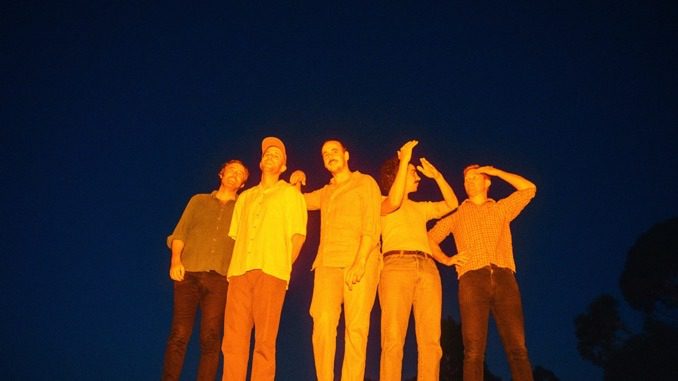

Everyone is making heavy shoegaze right now: Holy Fawn, Greet Death, Knifeplay, and many others have helmed a trend that borrows from black metal and shoegaze, some more from the former and others the latter, for one of the decade’s predominant musical waves. But few have been doing it as consistently and for as long as Nothing has. They’re a band, like their peers in Whirr, Cloakroom, and Deafheaven, from which this sound is molded. From their 2014 debut Guilty of Everything to their excellent collaborative LP with Full of Hell in 2023, Nothing, led by Domenic “Nicky” Palermo, have trafficked in this blend of Hum heaviness and Slowdive idyll as one of its core practitioners. Although they’ve rightfully inspired an entire generation of like-minded bands, they sound occasionally uninspired themselves on their fifth record and Run for Cover debut, a short history of decay.
Co-produced by Palermo alongside Whirr’s controversial guitarist (and Nothing’s own former bassist) Nick Bassett, a short history of decay gathers a new coterie of collaborators, as Nothing albums often do. Cloakroom’s Doyle Martin plays guitar and contributes vocals; Manslaughter 777’s Zachary Jones is behind the drum kit; Best Coast’s Bobb Bruno is on bass. Even harpist Mary Lattimore joins the crew for the downtempo, orchestral “purple strings.” Still, Palermo is the primary animating force, but for a band so commonly associated with noisy barrages and thrilling volumes, much of their latest record is relatively staid save for a handful of redemptive moments.
Lead single “cannibal world,” which was accompanied by an unfortunate music video that uses genAI, employs an army of IDM drums and Kevin Shields-indebted glide guitar to unearth a swoonworthy splendor. When these elements are combined with Palermo’s gauzy vocals, it’s one of the record’s standout tracks. “toothless coal” similarly uses screeching guitar squalor to great effect, with pummeling drums from Jones that channel the late Bryan St. Pere of Hum. The epic title track, an early highlight, thanks to its panning guitar drones and high-pitched squeals, resembles Loveless for the modern age: a lush, expensive-sounding interpretation of one of shoegaze’s most beloved pioneers.
It’s a shame that a short history of decay’s momentum sometimes comes to a halt on its slower, quieter tracks. This band excels at conjuring tidal waves of dense volume and rich textures but, throughout the album, Nothing makes an attempt at slowcore, an area of weakness they indulge in too frequently. “the rain don’t care” is a piano-led ballad that sounds pretty, but the compelling contrast shaped by the alloy of Palermo’s quiet vocals and loud instrumentals is lost. In other words: Nothing’s dynamism is traded in for a monotonous dirge. Whereas effective slowcore pulls you in with its glacial pace and muttered vocals, Nothing’s version feels more autopilot than deliberate. It could be forgiven if the song was a preface for something more invigorating, but “purple strings,” directly after it, is another inert, downtempo ballad that even gorgeous string contributions from Lattimore cannot resuscitate. There’s a short-lived bolt of excitement with “toothless coal,” but then comes “ballet of the traitor,” which is, you guessed it, more slowcore-by-the-numbers, changing relatively little and overstaying its welcome for five minutes.
a short history of decay has its standout songs, but when they are this few and far between and hiding among tracks that sound like generic Infinite Granite B-sides, Nothing’s latest effort comes up short. The band’s greatest strength is their juxtaposition of distorted intensity and dreamy atmosphere, so it can feel boring when the former is almost completely absent and the latter is drawn out to an omnipresent degree, resulting in a dulled, foggy impact. Closing track “essential tremors” is an example of how Nothing operates when they hold these two forces in harmony. They slowly ratchet up the noise, building and building until the fuzzed-out bliss hits. Eventually, the noise clears, and all we’re left with are the sputtering embers of a shrill guitar. It captures one of Nothing’s most dynamic performances, but the journey leading up to it lacks a similar level of verve. [Run For Cover]
Grant Sharples is a writer, journalist and critic. His work has also appeared in Interview, Uproxx, Pitchfork, Stereogum, The Ringer, Los Angeles Review of Books, and other publications. He lives in Kansas City.