
“Authenticity is dangerous and expensive.” Try as they might, no so-called ‘voice of the generation’ has managed to sum up the mid-2020s as perfectly and succinctly as Tina Fey offhandedly did in 2024 on a podcast I don’t even listen to. Over the past few months, this quote has lodged itself in my brain, resurfacing unbidden as I scroll through Twitter, wade through emails, slog through press releases. There is perhaps no line of work that makes you as intimately aware of the scarcity of modern authenticity as culture journalism: puff piece after puff piece, pull quote after pull quote, publicist-conjured blurb after publicist-conjured blurb. I’d go so far as to say that authenticity, at least as it pertains to celebrities—or even those hovering just outside the margins of fame—barely exists, not in any unmediated sense. Whatever fraction of it you think you’re glimpsing is more likely a carefully managed performance, a version of the self optimized for maximum relatability and minimum liability (yes, TikTok stans: “not media trained” is still a form of training). Everything is always a performance because everywhere is always a stage; social media has flattened the distinction entirely.
At this point, I’m of the opinion that the most honest thing a pop star can do is be explicit about their own artifice. It’s why I find myself far more compelled by the glossy, hyper-manufactured sheen of someone like Addison Rae than by the increasingly exhausting insistence on relatability—I’m just a girl next door/tortured poet/English teacher—that has come to define someone like Taylor Swift, despite her being, you know, a billionaire. After all, if authenticity is no longer possible in the public sphere, then I’d rather not be sold a lie about it. As someone whose livelihood depends on parsing, interpreting, and interrogating the work of artists, I’ve found myself growing more entrenched in this worldview by the day.
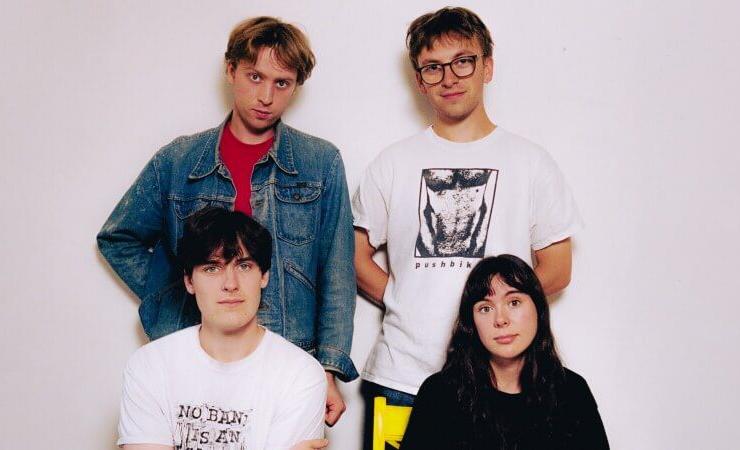
And then, every so often, an artist comes along who makes me falter in my cynicism, if only briefly. Right now, that artist is the UK-based “Britainicana” outfit Westside Cowboy.
WESTSIDE COWBOY ARE THE KIND of band whose “buzz” still feels like an accident they keep tripping over: four Manchester music-school friends, barely out of uni, playing as if the point is to stay in motion long enough that nobody can sand them into a product. They call what they do “Britainicana”—not quite a genre so much as a self-defense mechanism, a way of admitting they’re raised on American mythologies while still stuck (fondly, mordantly) in Northern England. Sonically, that mindset comes through as American roots shapes shoved through a British DIY garage-rock body: folk harmony and country phrasing jostling up against slacker guitars and punk velocity, like someone trying to sing a lullaby while sprinting. And the sprint has been rewarded, if not exactly explained: they’ve been together since 2023, put out their debut EP This Better Be Something Great in August, won Glastonbury’s Emerging Talent competition, and are now barreling into the next phase—So Much Country ’Til We Get There arriving January 16, with a UK/Ireland run and a European opening slot for Geese already queued up behind it.
If there’s a story people like to tell about Westside Cowboy’s sudden visibility, it usually involves momentum—algorithms, industry chatter, the vague gravitational pull of “buzz.” The band are far less romantic about it. When I ask them how they think they ended up here, bassist and vocalist Aoife Anson O’Connell shrugs off the mystique. “I think maybe we like to believe the reason we have ended up where we are is because we played a load of gigs,” she says. “Like, a load of live gigs.”
Naturally, I had to check one out for myself.
I first saw Westside Cowboy at Nightclub 101 on a December night so chilly it felt vaguely hostile—but only inside. The room was completely full, the air thick and unmoving, the kind of show where you resign yourself early to being sweaty and irritable for the duration, hoping it’ll be worth the pit stains. They came onstage and immediately started tuning. Eventually, guitarist and vocalist Reuben Haycocks looked up and said, very plainly, “This will be a common feature in our set: silence.” A beat. “And then rock music.” And then the rock music in question came, and I forgot about everything else.
A couple numbers in, my friend (who knew nothing about the band but had come along for the ride) leaned over to me, beaming, and half-whispered, half-yelled, “I’m charmed! I’m charmed by them!” Something about the phrasing clicked, and I jotted it down in my Notes app while nodding fervently back. Not just “these guys are good,” not just “this band is interesting,” but charmed—in the sense that something about them cuts past evaluation entirely and veers straight into an odd kind of affection.
Westside Cowboy spent the first few songs stopping mid-verse to retune, restarting where they left off, apologizing, laughing, even getting visibly annoyed with their own equipment out of sheer unwillingness to paper over anything that interferes with how they want the song to feel. At one point, after yet another tuning interruption, O’Connell offered a quick, automatic “cheers,” and when the problem still wasn’t fixed, Haycocks suddenly slammed his forehead into the mic in frustration mid-song, hard enough to make me wince. Charmed, still. (I mean, sure, self-deprecation is all the rage in media training these days, but last time I checked, self-inflicted bodily harm is not. That one was all genuine). Introducing another song, he said, “We never sound good playing this one, but we had space we needed to fill on the setlist,” then added, “So if people want to get a beer, now is your chance.” No one moved. (When someone in the throng shouted “That was good!” afterward, Haycocks shot it down immediately. “That was fine. You’re just saying that”). And towards the end of the set, drummer Paddy Murphy—looking a little uneasy, sweating even more than the rest of them—muttered under his breath, just before a song began, “I might throw up.” Haycocks looked back at him, alarmed, but Murphy waved him off: “It’s cool though.” With little recourse but to keep playing, they count in and burst into another riot of sound.
Again: charmed. Not because they’re messy, or self-effacing, or “relatable” in the way that word has been sanded down to mean nothing, but because they’re letting you see the work as it’s happening—and then, because they’re simply good at what they do, you get to see it paying off. Live music is precarious by nature, and that ought to be the point. Westside Cowboy leans into that instability and trusts the songs to hold—which they do. Repeatedly. Watching eagerness and effort translate, in real time, into something genuinely good is rarer than it should be (we are, after all, in an epidemic of feigned disinterest and irony poisoning), and it’s almost weirdly moving when it happens.
Even with only ten or so songs to their name—five of which don’t even officially come out until tomorrow’s EP—Westside Cowboy’s music still veers wildly from song to song. They have the live-wire rawness of punk with the warm affect of folk and the dry humor of 90s slacker rock. Modest Mouse-ish riffs give way to folkier passages; haunting isolated vocals build into harmony-filled anthems, then snap back with the next song into something sharp and nervy. Live especially, that volatility feels less like genre-hopping than eagerness. Feeling bleeds through everything they do, regardless of tempo or texture. There’s a restlessness to it, an impatience with even the notion of stasis, an allergy to anything that feels overworked or inert. There’s a sense, watching them, that they’re perpetually slightly ahead of themselves. Whether it’s O’Connell’s unimaginably clear voice cutting through the feedback, Haycocks blinking the sweat out of his eyes as he bites out another verse, Murphy’s gleefully bombastic drumming in the back, guitarist and vocalist James (Jimmy) Bradbury strumming so fast you fear his hand might fall off, it’s hard to tear your eyes away.
For the last song, Murphy left the drum kit entirely, picked up a handheld drum, and joined the rest of the band around a single microphone. The four of them stood in a loose half-circle, singing their song “In the Morning” together, all of it bleeding pure feeling—the kind of number someone unfamiliar with the band would never have predicted after the sardonic drawl of their first few minutes onstage. I won’t pretend it was some hushed, transcendent moment; people were still shifting around, the room still unbearably hot. But everyone was paying attention in a way that felt almost unconscious, like the collective decision had already been made for them. Charmed, all of us.
The cynic in me wants to scoff that this kind of thing only works because the group is so early on in the trajectory, because the machinery hasn’t fully closed around them yet. But there’s a noticeable lack of self-mythologizing here, and not as a lack of intention or ambition; just a resistance to presenting themselves as finished. They’re visibly excited, visibly frustrated, visibly delighted even when it’s going wrong. There’s an earnest belief in music here, and in what they’re doing with it: not blind enthusiasm or naïveté, but an awareness of the dystopian state of everything coupled with the conscious decision to care anyway. In a world trending toward a constant state of doom-induced apathy, that kind of focus—passionate, unabashed, eager—feels faintly unseemly, which might be why it registers as something unfamiliar, something indescribably winning. And coming from someone who spends most of her time assuming that everything she’s being shown has been rehearsed and optimized to death, The Rehearsal-style, that kind of earnestness can be enough to knock the wind out of you.
THAT IMPRESSION ONLY DEEPENED THE next morning, when I met Westside Cowboy for an interview in what can only generously be described as the middle of nowhere. Their hotel—a nondescript Holiday Inn tucked into an industrial stretch of Brooklyn on the tail end of the Sunset Park Chinatown district—sat among warehouses, produce markets, and not much else. We tried, and failed, to find a café, commiserating about our respective countries’ descents into fascism along the way. Everything was closed. It was bitterly cold, the kind that seeps in fast and stays. Eventually, we gave up and sat down at a random, mismatched outdoor table wedged between garbage cans on the side of the street, the metal grate of a shuttered storefront pulled down behind us. Cars passed blasting Christmas music. A man stopped to ask if we were Mormons (and was disappointed to learn that we were not, as he had set out to convert Mormons in particular to a different niche sect of Christianity that believes Jesus was just a guy, actually, a take the band unanimously agreed was “rather based”). Paddy Murphy was fighting off a cold and Reuben Haycocks had a bruise on his forehead from slamming it into his mic the previous night (yes, seriously) and I couldn’t scroll through my notes because my fingers had gotten too numb. Not ideal conditions for an interview. But shows, famously, go on.
As they tell it, most of them met at university, which is not especially interesting on its own (although the fact that the day of our interview happened to be the day Murphy, Haycocks, and O’Connell were set to graduate—an event they were missing due to touring in America—rather was). But they describe that period less in terms of aspiration than proximity: they were all there to study music, but in hindsight, being around each other, being around instruments, being around people who liked the same things, that lingered. In a bizarrely perfect mirror of the poet John Ashbery’s famous first encounter with Frank O’Hara, in which he overheard the latter mention his preference for Poulenc over Wagner in a crowded room at a cocktail party, the Cowboys lore goes that Haycocks first clocked Murphy’s existence after the latter’s voice cut through the din of a “freshers” event enthusiastically endorsing Nick Drake. And the rest, as they say, was history. Pavement followed, then Car Seat Headrest, then the two of them were in each other’s rooms with the records they’d dragged to Uni like security blankets, sharing them (“and a kiss,” Haycocks cracks) with fervor.
Aoife Anson O’Connell entered the picture around the same time—she was in the same freshers group, after all. She was trained as a cellist, but when three of her friends were in a guitar shop and pitched a new band, she realized the only empty spot was that of the bassist, so she simply learned the bass. She talks about the switch in the most deflating terms imaginable. Why make the move? “Because I was in the room and I was friends with these guys!” O’Connell says, like it should be obvious. She does, though, get a little quieter when the cello comes up. “I really love the cello,” she adds. “I really miss it—a lot, at the moment.” Even then, though, she frames the whole thing less as a loss than as a reroute: she loved playing music, always saw herself doing it forever, and never quite fit the narrow, formal path she’d been trained for.
James Bradbury came via work rather than school, orbiting the same small Manchester ecosystem from a slightly different angle: guitar shops, rehearsal rooms, bands that existed briefly and then didn’t. By the time Westside Cowboy formed, he was working at Johnny Roadhouse, the Manchester guitar shop that doubles as a kind of informal community center for local musicians. It’s there that the band’s current shape finally snapped into place, less through any grand decision than through proximity and boredom. One afternoon, Bradbury turned to his friends and asked, more or less offhandedly, if they wanted to start a band called Westside Cowboy (hilariously, the band’s name was already in place when he asked them if they wanted to be in it). They said yes. That was more or less it.
Fast forward a year or two, and suddenly they’re on the precipice of releasing their second EP, So Much Country ‘Til We Get There—five songs that Murphy describes as feeling “quite transitional,” a snapshot of the moments in which they were written. The EP also clarifies something you can hear live: that their sound isn’t stabilizing so much as widening—“so much country” not as a promise of genre fidelity, but as a mischievous warning label. If This Better Be Something Great introduced a band built around forward motion, So Much Country ’Til We Get There is them learning where to splice and rebuild without losing the feeling of something happening right now. (Although, as Haycocks would have you believe it, the “first EP was the first week of us being in a band, and the second EP was the second week of us being in a band, basically.”)
On record, that motion takes a few different shapes. “Don’t Throw Rocks,” So Much Country’s first single, is the most overtly kinetic—built around the sensation of acceleration itself, each section tightening the screws until it spills into a kind of breathless release. Other songs loosen their grip. Standout track “Strange Taxidermy,” led by O’Connell, pulls the band into a quieter, stranger register: intimate without being precious, folk-adjacent but unsettled, its restraint feeling deliberate rather than decorative. It’s a song that lingers long after it’s ended, O’Connell’s hauntingly clear voice echoing somewhere in your skull. Elsewhere, the band lean into repetition and propulsion as a form of doubt-management—lines circling back on themselves, guitars flickering between urgency and weariness, voices overlapping not for polish but for reassurance. Even the more anthemic moments carry a sense of impermanence, as if the songs know they’re provisional, trying things out in real time. The EP doesn’t resolve these impulses so much as hold them together, documenting a band testing how many directions they can move at once without coming apart.
But in person, the “trajectory” doesn’t read as triumph so much as whiplash—less a rocket ship than a new nervous system. Touring, Haycocks tells me, means being away quite a lot: “We’re all homebodies, really.” It’s the small things that start to grind first: “not being in your bed and not eating your own food.” Then, inevitably, the emotional math of it: nights of playing to people who—hopefully—enjoy what you’re doing, followed by the anticlimax of waking up somewhere that isn’t yours. “It’s a very intense lifestyle,” he says, which means “intense highs and more intense lows” than university ever gave them. Bradbury puts it in the language of routines rather than feelings: at uni, they went to class, they went to practice, they worked shifts—“music shops, pizza places and stuff”—and life had a shape. Now the shape keeps changing. Not necessarily in a glamorous way, either. There’s a tiny, telling moment where Haycocks says he’s noticed that, lately, they’re getting “way better,” and that you can “understand when people are pissy or grumpy.” The kind of progress you make when you’re learning how to keep liking each other while living out of bags and chili-and-hummus sandwiches. “We’re not completely succeeding,” O’Connell adds. “But I don’t think we’re totally failing. We’re trying to be hopeful.”
The fame-adjacent pressure—the version of “rise” that isn’t just bigger rooms but more expectation—shows up most clearly when they start talking about what you’re meant to do now, culturally, if you’re a band. Murphy describes the constant nag that comes with being “up and coming”: you “gotta do all this extra stuff,” beyond writing songs and playing shows—TikTok, lyric videos, whatever the week’s little content rite is. O’Connell’s irritation is sharper, because it’s less about effort than premise: “This expectation to be like a personality—it’s awful. Why is everyone expected to be a figure in themselves? We’re just making music!”
Despite all the instinctual rejection on the matter of principle, the music industry sings a siren call that hardly any of us would be entirely invulnerable to—something the band has learned the hard way. “We always sort of assumed that we would be immune to it, just because we were arrogant, I guess,” Haycocks admits as the rest laugh knowingly. “But I think we all felt the effects more than we had originally expected. Parts of it have been a lot more difficult than we thought they’d be.”
In those moments, though, it is—of course—the music that saves them. “Whenever we feel like we’re just sort of swept up in the quote unquote ‘industry,’” Haycocks says, “we now know that if we just go into Paddy’s bedroom and try and write a song, we’ll… I don’t know, feel like kids again or whatever.”
WHEN WESTSIDE COWBOY STARTS TALKING about how they make music, they keep coming back to the same crude diagnostic tool: speed. If something drags, it’s probably dead. Bradbury and Murphy both talk about tempo the way some people talk about mood: as something that shifts imperceptibly until suddenly it’s gotten away from you. Murphy tells a story about an earlier band he and Bradbury were in—the surf-punk outfit Katz—where each set got shorter than the last because they kept playing faster. “We saw it as cowardice if we played one set in 28 minutes and the next wasn’t 27,” he says. I point out that this is not, strictly speaking, sustainable, because eventually you’re going to hit zero. Bradbury laughs. “And that’s why we don’t play anymore.” O’Connell jumps in to remind them they even released a single that’s “like 39 seconds.” “38 seconds long,” Bradbury corrects, proud.
The idea carried over, though, mutating into something more useful. Murphy references the London Calling recording session in which The Clash wanted another take after feeling they sped up at the end of the song, only for producer Guy Stevens to just wave it off with the now-famous one-liner: “All good rock and roll speeds up.” They all talk over each other here, delighted by the permissiveness of it. “We carried that one around,” Bradbury says. “And that’s just true,” Murphy adds. “Like, you get excited. You should let that show.”
It’s less impatience than a commitment to instinct, and a mistrust of anything that requires too much explanation—and also, admittedly, just a pure love of speed (“It’s just a bit boring when you’re going too slow, isn’t it?” Bradbury shrugs. Haycocks admits that one of their earliest releases already feels too slow, even just a year down the line. “It’s unlistenable to me,” he insists, wincing a little. “I genuinely cringe when it’s on”). When I ask whether they ever worried about playing too fast, they all laugh immediately. They do concede that some limits exist. One song in particular—the lean garage-rocker “The Wahs” from their upcoming EP—only works if it stays within a very narrow band of control. “There is a threshold,” Haycocks admits. Apparently, their sound engineer (who they point out was in Katz with Murphy and Bradbury, so someone already “accustomed to fast music,” to put it lightly) sat them down mid-tour and told them to rein it in—or, as O’Connell bluntly summarizes: “Guys, it’s getting stupid.”
But if speed is the engine, accessibility is the brake. When Westside Cowboy talk about what they want from their songs, they don’t frame it in terms of audience growth or reach—or, unlike most bands I’ve talked to, even emotional output—but use a much simpler metric: could someone else pick this up and play it? Haycocks says they’ve always been almost doctrinaire about it: “Four chords and the truth,” as he puts it. “If you’ve been playing guitar for like a month, you can play basically all Westside Cowboy songs.” Most of their tracks sit on the first chords you learn—and that’s on purpose, considering all of them have been classically trained (they met in music school, for God’s sake). Complexity is not the enemy here, but distance is. As Haycocks explains, there shouldn’t be “a barrier or a gate” where you love a band but they feel “so far away” because you don’t have the pedals or the training or the right postcode. Music, to them, is anything but precious; people should be able to touch it, misuse it, run off with it.
James Bradbury tells a story about returning to Johnny Roadhouse during a brief stretch at home, hanging around the shop as he often does. A kid he recognizes—someone who’d been to a Cowboy show a few weeks earlier—asks him to check the chords to “Shells.” Bradbury is confused. “How do you know that?” he asks. The kid shrugs. It’s on Ultimate Guitar. Bradbury laughs when he tells it, still slightly stunned. “He even had the little riff,” he says, mimicking it with his hands (and mouth: “Bam, bam, boom, bam, boom”). There’s something quietly revelatory in the way he describes it—and something loudly revelatory in Murphy’s reaction: “What do you mean it’s on Tabs?” he asks, like he’s being told they’ve been added to the national curriculum. “No way. Is it actually?!”
The band’s fixation on accessibility isn’t limited to chord charts. It’s in the way they treat the voice as communal property—something you use, not something you earn. Murphy is blunt about it: “Everyone’s trying to find reasons for why you shouldn’t be doing something.” But music “doesn’t have to be this crazy technical ability. It’s not a sport.” O’Connell is almost comically baffled that people act surprised the whole band sings. “We get so many people being like, ‘that’s crazy, like, you all sing.’ Is it crazy?” she asks. “I don’t know when people in bands decided to stop doing that.” Bradbury’s defense is simple: sometimes they can’t sing either, but you “give it a go.” And O’Connell—pushing past the question of ability altogether—lands on the deeper gripe: they’re “really connected to folklore and folk culture,” she says, and singing together is “literally how people communicate,” how stories get passed along, the most natural thing in anyone. Why would anyone opt out of that?
They’re not particularly interested in the vague, clergy-ish version of artistic impact—changing lives, saving souls, and the like. Their dream is practical: somebody hears a song, goes home, and tries to play it. O’Connell says that if one kid asks for a cheap instrument for Christmas and starts playing, their job is done. The point, Murphy says, is for people to “spring off and start their own bands.” In other words, the music isn’t meant to be admired from a distance, or even just felt up-close. It’s meant to be used—and reused. This, too, helps explain the impatience. Songs that linger too long, that get too comfortable, risk becoming objects instead of tools.
WHICH IS PROBABLY WHY, AT a certain point in the conversation, O’Connell starts talking about the band’s recent shift into being, in her words, part of “a business world,” and you can hear the distaste even as she’s careful not to sound ungrateful. It’s a specific kind of vertigo: watching a thing you love get translated, in real time, into infrastructure you don’t trust. “It feels completely unnatural,” she says of the industry’s architecture. “The way it works. The way it’s set up.” The band don’t romanticize their discomfort, either. They’re explicit about the trade: “We’re so fortunate that this now pays our bills,” O’Connell adds, but the gratitude doesn’t cancel the disgust, it just sharpens it.
It’s easy to read that friction as a symptom of scale—an inevitable psychic tax that arrives the minute a band’s name starts circulating outside its hometown. But the band seems less spooked by attention itself than by what attention quietly normalizes: the way you can become complicit by accident, simply by continuing to participate. That’s why, when the talk turns to Spotify—necessary, omnipresent, spiritually rancid—their solution isn’t to posture as purists. It’s to joke about a future that’s both obviously absurd and weirdly sincere: “One day you’re only going to be able to listen to us on a pirate radio station,” Haycocks says, as Murphy chimes in: “Being broadcast from our very own shortwave.” Bradbury: “Start buying up AM radio.”
The bit works because it’s funny, but also because it’s how they talk when they’re trying to tell the truth without auditioning for sainthood. They don’t frame themselves as uniquely principled, a protest band standing up to the man—if anything, they’re allergic to that kind of self-mythology, choosing to conduct their battles on the ground and in their day-to-day life instead. Murphy’s quick to clarify: “Thematically, we’re not necessarily a political band. It’s not a direct influence on the music, but it massively influences everything else: what shows we play, who we choose to work with, the food we eat and the clothes we wear.” (All members of the band are vegan or vegetarian, for one thing—which makes touring on a budget rough and, apparently, results in a lot of riders asking for hummus). This isn’t the glamorous version of political art; it’s the version where ethics show up as admin. It’s also, crucially, a version that doesn’t require the band to retrofit grand ideological narratives onto songs that weren’t written for that purpose.
There’s this instinctive sense that the infrastructure surrounding music has drifted very far from the thing itself, and that no amount of personal success is going to make that feel less strange. O’Connell voices that fear directly: “Not to be really dramatic, but there have been some points where we’ve had to ask ourselves, ‘Do we have to stop? Can this even be a life?’” Her phrasing matters here—a life, not a career. And when Murphy talks about the appeal of being around other grassroots bands who treat activism as non-negotiable, he frames it as a way of avoiding the standard bargain the industry offers: “We want to do this, but we want to do it on the terms that means we can sleep at night. And sometimes everything just feels like, in order to do that, we’ve got to exploit some part of ourselves or others.”
Which is where No Band Is An Island enters—as a relief valve more than a branding exercise. Founded by the band themselves, it’s an initiative meant to “place political action back into the heart of the indie scene,” raising funds and building a collective ecosystem for artists to organize together. It can feel “a bit helpless sometimes, because you’re just playing music, and the lyrics themselves aren’t political,” O’Connell says. So: build something alongside the music, something that actually does something. When I ask what’s been making them feel even slightly hopeful lately, she mentions larger-scale efforts—“Music Declares Emergency” and “the new one with Fontaines (D.C.) and Kneecap”—but she pivots quickly to the local, the tangible: “We’ve got stuff in Manchester. Really, it grows organically from your friends. If no one’s going to represent anything at a community level, then there’s not really any point. And we’re so lucky that Manchester is just such an organism for that.” Their politics don’t live primarily in statements or aesthetics; they live in scene-making, in the boring work of trying to build a life that doesn’t rot you from the inside out.
Haycocks, meanwhile, refuses the romance of waiting to be saved by the “right” structure. He credits O’Connell as “a massive engine” in Manchester, and describes what the band tells people now, when they’re approached at gigs about how to respond to the bleakness: “the best advice is just to start something, just do something. No matter how big or small.” It’s the same ethos as their songs’ accessibility—four chords, no gatekeeping—translated into civic terms. If the industry, hierarchical and looming as it is, is built to make you feel powerless, their instinct is to build sideways.
THERE’S A REASON THE BAND’S politics and their songwriting keep collapsing into the same vocabulary of access. Even the term that’s followed them around—“Britainicana,” coined by Murphy on Westside Cowboy’s second week of existence—only really makes sense when you hear them define it. “It’s not really a genre,” O’Connell says. “It’s more like a mindset.” It’s less a descriptor of sound, exactly, than a practical description of what actually happens when you’re weaned on American mythologies and still have to live in England. Westside Cowboy can rattle off the canon both ways: “We love Big Star, and we love Bob Dylan, and we love Hank Williams,” Murphy says, then pivots, without blinking, to the other half of the equation: “but we also love Teenage Fanclub and we love The Pogues and The Full Monty. It’s just smashing that together.” Take the twang and drawl of Americana, run it through the sarcasm and chipped paint of home, and see what survives.
O’Connell is the one who turns that “smashing together” into an ethic. On our way to our shitty little sidewalk table, we had talked about the rise of the far right—about the way “patriotism” has been ceded to people who only mean it as exclusion. She picks up that thread where we left off, and declares she wants the word back. “I genuinely want to start using the word ‘patriotic,’” she says, carefully, like she’s handling something that can still burn you. “In a good way. All those English things, the dry humor and coping mechanisms and industrial Northern towns and Greggs vegan sausage rolls, and the love and appreciation that comes out of that.” That’s Britainicana too: affection without illusion, tenderness with its teeth still in.
This is probably the part where I’m supposed to tell you whether Westside Cowboy can “survive” the machinery—whether the charm will last once the infrastructure fully closes around them, once the rooms get bigger and the emails get more insistent and the pressure to become a product starts arriving disguised as advice. I don’t know. They don’t seem to know either—as O’Connell puts it, “If you sit down and think about it, anything that rises really fast has to fall really fast, so we’re kind of waiting for that”—and that uncertainty is part of what makes them feel unusually trustworthy. There’s no grand self-myth here, no insistence that they’re immune to compromise. Just a band trying their best to build an ethic sturdy enough to hold their own passion without swallowing it whole. And, well, I’m not a rising rock star, but that juggling act feels pretty damn familiar to me.
Maybe that’s what I was responding to at Nightclub 101, sweating through my shirt and watching them stop mid-verse to retune and then barrel back in anyway: not some pure, untouched authenticity—nobody gets to have that—but the visible decision to keep the seams exposed, let the work show, and care without varnish. The world they’re stepping into is designed to reward smoothness, to punish hesitation, to turn every jagged edge into content. Westside Cowboy keeps doing the opposite. They speed up. They sing together. They tell you when they don’t sound good and then they sound off anyways. They hand you the chords. They build sideways.
And if authenticity really is dangerous and expensive, then maybe the closest thing to it left isn’t confession, or intimacy-as-brand, or the performance of being unperformed. Maybe it’s something dumber and harder: an ongoing practice. An action, instead of mere branding. A band proving, again and again, that music is a thing you can touch—misuse, reroute, pass along—until enough people start treating it that way that the machinery has no choice but to contend with it.
Casey Epstein-Gross is Associate Editor at Paste and is based in New York City. Follow her on X (@epsteingross) or email her at casey@pastemagazine.com.