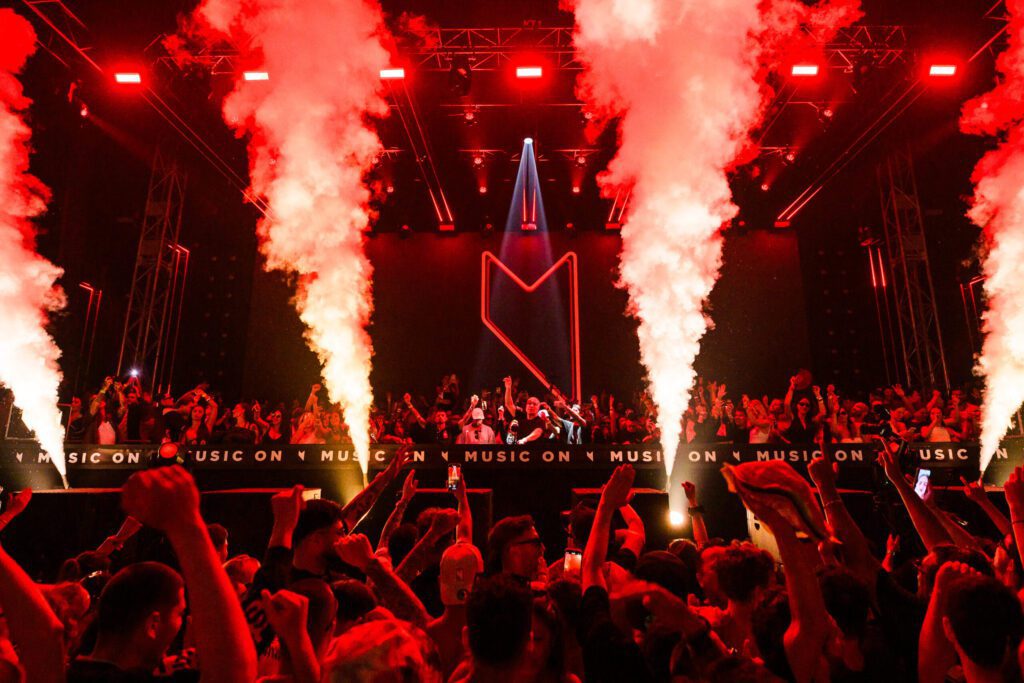
About halfway through clipping.’s Splendor & Misery Fest, I could sense my ears starting to fatigue. The Knockdown Center, a sprawling, multi-room venue in Maspeth, Queens, that was once a door factory, is an ideal setting for a festival dedicated to blurring the lines between noise and hip-hop. It’s a prime spot for a glorious sensory overload: frequencies bounce off its concrete floors and swirl in the rafters, creating overtones that hover in the room like a neon vapor. That night, August 13, 2026, the acts were split between the cavernous Main Stage and the smaller Texas Stage, a more brutalist room that feels like an above-ground bomb shelter. But after three or so hours of music, I was seeking a moment of calm.
The Intersection of Noise and Hip-Hop
I had just experienced the blistering sound art of Evicshen, the project from San Francisco-based instrument-builder Victoria Shen. Walking into her set, I was greeted with the regulation strobe lights of a noise show and a sheer wall of sound I was unprepared for. Many in the shoulder-to-shoulder crowd nodded their heads to whatever rhythms they could discern from Shen’s overdriven squall, while others stood with their eyes closed, engaged in a form of harsh meditation. It was a testament to the diversity of the crowd—a beautiful, intergenerational mix of goths, fashionistas, hip-hop heads, and college radio DJ types—that the center of the Venn diagram was wider than most would suspect.
Those who even casually listen to clipping.’s sandblasted beats and Tommy Gun raps have at least a small appreciation for spikier sonics. The festival curation treated this as a door cracked open to an entire new world, betting the audience would be more than willing to step through. Early in the programming, abstract turntablist Maria Chavez enraptured spectators at the Texas Stage with her broken-record, needle-skipping collage, while the full-band incarnation of Shabazz Palaces provided a smooth, spacious counterpoint that felt like magic.
Defining Experimentalism
It struck me that this is the real core of “experimentalism” in music: not pushing super hard to find something new, but finding a way to push further into your own ideas. Being “experimental” isn’t something to simply declare with a bold font and a press rollout; it’s an adherence to curiosity as a North Star. These thoughts first bubbled up during ELUCID’s set, where he leaned heavily into the serrated sounds of 2024’s REVELATOR, presenting the most punk version of his performance I’d witnessed to date.
The Main Event: A Decade of Splendor & Misery
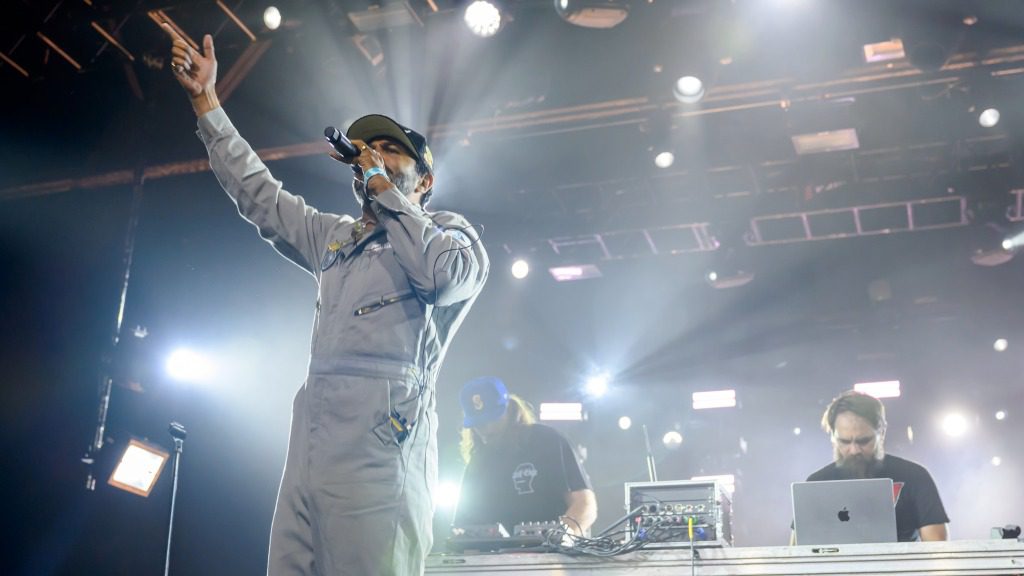
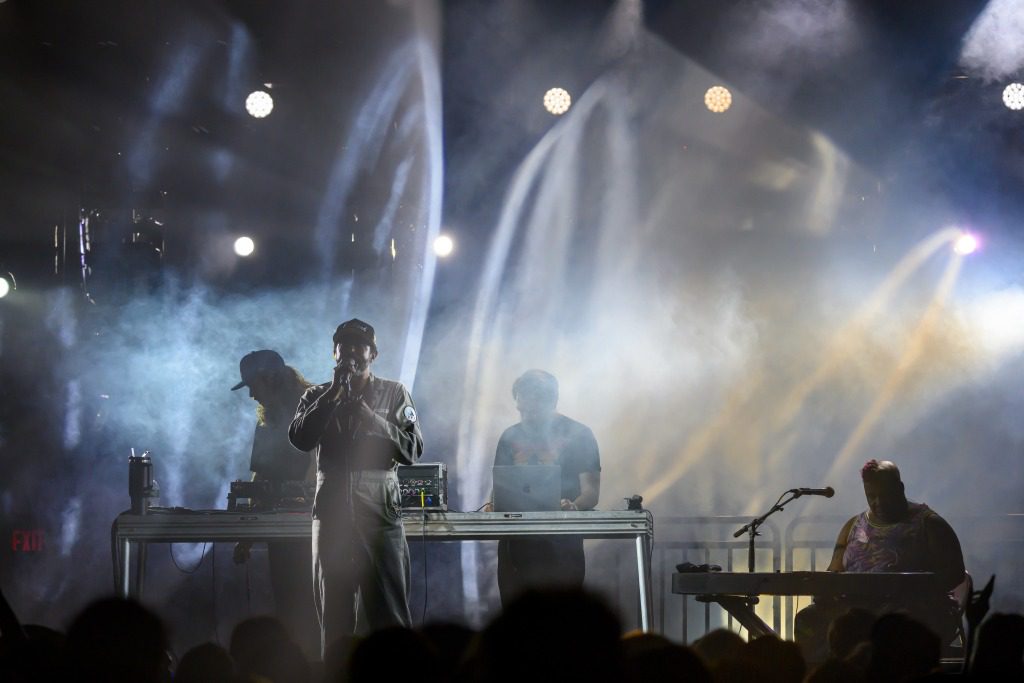
After a raucous set from Fatboi Sharif, it was time for the main event. clipping.’s albums can be a little impenetrable at first, as their sweeping, well-considered concepts take a few listens to click. Splendor & Misery was a turning point, a science-fiction concept album so thoroughly rendered that the group earned a Hugo Award nomination. On stage, Daveed Diggs was a force of nature, his rapid-fire delivery feeling as natural as it was extraordinary. When the group brought Sharon Udoh back on stage for a soaring rendition of “Story 5,” the massive room fell into a reverent silence.
In that moment, I realized the key to experimentation is trust. It is built on the belief that your audience will find you somewhere along the path. As Diggs noted, thanking the crowd for letting them continue to make whatever they wanted for the past decade, the cheering reached a new decibel level—a hum, a frequency, an energy that proved the experiment was a resounding success.