
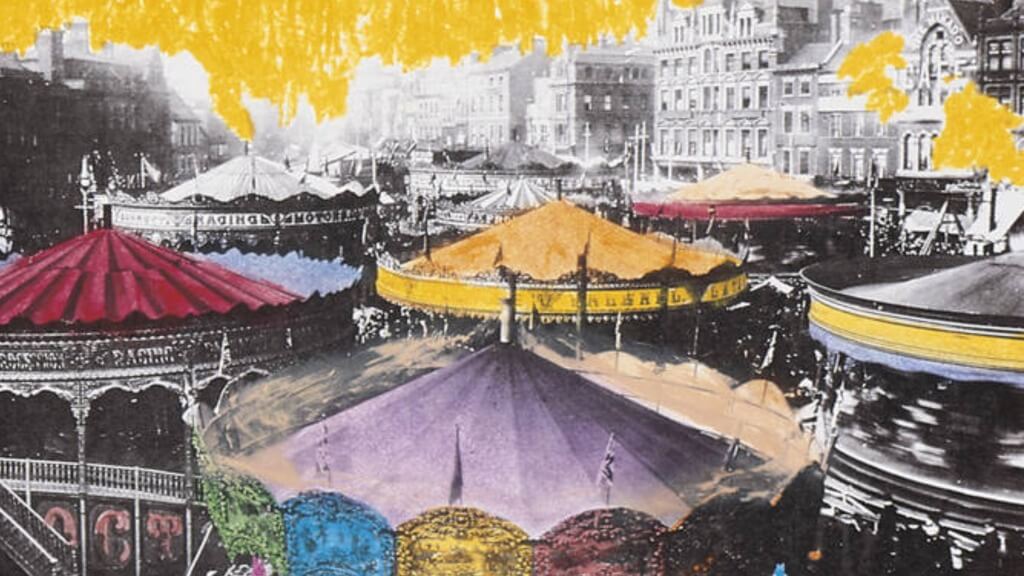
A Debut Defined by What It Isn’t
Most debut albums are viewed through the lens of their legacy, but Neutral Milk Hotel’s 1996 release, On Avery Island, occupies a unique position in indie rock history. Often unfairly relegated to the shadow of its successor, In the Aeroplane Over the Sea, this record is frequently dismissed as a mere rough draft. However, to view it solely as a precursor to a masterpiece is to ignore its singular, visceral power. While Aeroplane is a polished, transcendent achievement, On Avery Island remains a live wire—a record defined by its own chaotic, unvarnished identity.
A Mind in Motion
At the time of its recording, Neutral Milk Hotel was not a traditional band, but rather the singular vision of Jeff Mangum. Working in collaboration with Robert Schneider of The Elephant 6 Recording Company, Mangum crafted an album that felt less like a collection of songs and more like a stream of consciousness. The record is characterized by its lack of symmetry and its refusal to resolve into neat, radio-friendly structures. It is an album of accretion, where layers of fuzzed-out bass, air organ, and brass are built upon four-track recordings, resulting in a sound that is intentionally buried in tape hiss.
Mangum’s creative process, which he described as “active imagination,” allowed fragments of dreams, memories, and images to congeal into something tangible. Where Aeroplane would later expand into a world of historical and mythological scope, On Avery Island burrows deep into the immediate, the domestic, and the deeply personal. It is an album that captures the feeling of a mind in flux, never settling into a single mode or register.
The Structural Beauty of Chaos
The brilliance of On Avery Island lies in its embrace of disarray. The fidelity is often abysmal, the sequencing is intentionally jarring, and the album concludes with a fourteen-minute psychedelic noise experiment, “Pree-Sisters Swallowing a Donkey’s Eye.” Yet, this chaos is entirely structural. The album aims to depict a world falling apart at the seams, and it succeeds by refusing to tidy up the edges. Tracks like “Song Against Sex” and “Gardenhead / Leave Me Alone” demonstrate a masterful blend of melodic sweetness and abrasive feedback, reflecting the internal fractures of the human experience.
The record’s emotional core is found in its raw, unmediated lyrics. Whether Mangum is exploring the grotesque imagery of childbirth in “A Baby for Pree” or the devastating, shell-shocked reality of suicide in “Three Peaches,” he maintains a level of emotional lucidity that is both rare and unsettling. He does not offer easy answers or moral resolutions; instead, he presents the confusion of living in a world that often seems to fight against life itself.
A Lasting Legacy
Ultimately, On Avery Island is a document of a young artist before he learned how to mythologize his pain. It is an honest, uncontainable, and deeply human record. While it may lack the polished arc of later works, it possesses a raw, unfiltered energy that remains essential. It is a reminder that sometimes, the most profound art is found not in the resolution of contradictions, but in the willingness to let them exist, unresolved and resonant, in the mess of the everyday.