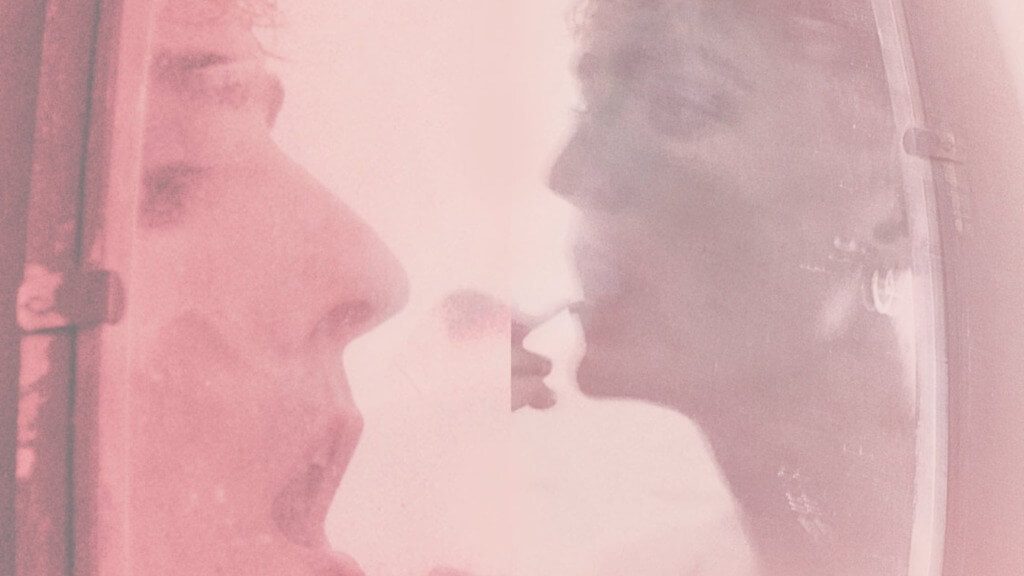
“Three people will die listening to this album,” the Bandcamp description of Everyone Good is Called Molly reads. “Zzz they will endup in the same place.” I’ll take those odds. There’s no backstory to Princ€ss’ Finn Carraher McDonald or why he calls himself Nashpaints, only mystery, Maria Somerville collaborations, and decaying tapes. McDonald’s last record under the banner of Nashpaints, 2020’s Blindman the Gambler, came with Duretti Column tones and my bloody valentine reverb built in like a keyboard preset. But the references in its follow-up are a paradox: less detectable but even more. An intense ache of out-and-out rock festers beneath Everyone Good is Called Molly’s thin, airy veneer. The songs feel almost disembodied, with McDonald wearing the skin of a half-dozen eras and spitting them out into a near-perfect exhibition of lithe pop echo.
This album somehow calls to mind the voices of Hope Sandoval, Patrick Flegel, Miki Berenyi, Rachel Goswell and Neil Halstead, all while the swirling psychedelia of Dean Wareham’s On Fire guitar blasts smear throughout the Nashpaints cloud. There’s no lyric sheet to help untangle McDonald’s singing, only what conversations come from his bended strings. “Boyfriend First” is a seven-minute mass of noise with chord streaks you’d have to break your nails just to make. There’s a lot of color in here even as the static fattens and the synths undress; McDonald has melodies coming out the eyes. “Boyfriend First” sounds like Natalie Imbruglia covering Deerhunter—or maybe it’s Deerhunter covering Natalie Imbruglia—in a sewer tunnel. It’s a shoegaze-teetering zipper.
Most of Everyone Good is Called Molly is subterranean. “Molly” is a consuming ambient melange of tips and taps, flanked by heavy breaths and a strung-out, buzzing drone, then “23” crawls out of that black and into a glassy, quick-decay tone treble-boosted by a warm, jangly low-mid. Despite Nashpaints’ Dublin origins, Everyone Good is Called Molly comes like a 15 love or Escho recording—2010s dream-pop done up in 1980s textures. When McDonald pitches his vocal down on the dimly lit “The Giver,” he steps into a drowsy, pompadoured croon à la Alan Vega and squeezes a distant, gender-bent duet out of the song’s splendid gate. When “The Giver” nears its close, a brief splash of a childlike orchestra rings through, hooking itself to the tissue of “Stretching” and its loping, Cindy Lee-style “Realistik” guitar chorus.
The hypnagogic instrumental “Link” whispers like a motel shag carpet full of half-dead singing bugs. “Burning” is part OPN synth prism, part guitar constellation. McDonald’s tempo ranges from lackadaisical to crushing here, and narcoleptic vignettes of harp and drone blur beneath his chintzy, swooning vocal. His voice alternates between romantic, moody heroine and torch-songstress on “Lost Dog,” where guitars chime like imaginative, Atomic Age sedatives. In the instrumental clutter of “Desire,” he sings like Lou Reed did on “Sunday Morning” 60 years ago, at least until McDonald’s ramshackle falsetto spirals out of earshot and the foreground melody begins to pang against a consuming, metallic wall of sustain. Everyone Good is Called Molly ends on a pulled-apart, acoustic transmission that recedes into the ‘50s-echoing “Tonight I’m Thinking of My Big Eyes.” Percussion is a faint effect on the album, but a rare rhythm—it’s either a tapping foot or an apparition—appears and uncouples from the bedroom orchestra at its end. The vagueness of Everyone Good is Called Molly sounds like the radio station in my head.
Though much of its realm is obfuscated in drones and shadows, Everyone Good is Called Molly is as Brill Building-coded as it is a glowing child of Thatcher-period 4AD. These songs are full of timeless textures and ambient murals; hallucinations of pocket orchestras build and congeal in a soup behind McDonald’s transmuted frequencies. If Nashpaints is a blanket full of holes, then there’s sunlight crawling through each one on this album. Everyone Good is Called Molly briefly departs this world and reappears with a new pop music template. Three people are going to die listening to it. Go press play on Nashpaints and find out if you’ll live to say that you did. [MirrorWorld]
Matt Mitchell is the editor of Paste. They live in Los Angeles.