
“That he not busy being born / Is busy dying.”
If asked to sum up Bob Dylan’s career using his own lyrics, one could do far worse than clipping the above line from 1965’s Bringing It All Back Home. This lyrical maxim captures an idea articulated by Dylan throughout his career—that stagnancy rings out like a death knell for the true artist. Put in simpler terms: Dylan hates to repeat himself. Even as we try to catalog and sort the legendary songwriter’s career into decades, phases, or other tidy boxes that feel less daunting to examine, the moving target that is Dylan’s artistry opens all of us up to folly. For the holidays, we revisited Dylan’s Christian trilogy only to remind ourselves that all three albums, though forever lumped together, sound little alike and boast very different brands of evangelism. Similarly, 1976’s Desire bears very little in common with its achingly vulnerable predecessor, 1975’s Blood on the Tracks, or its R&B-leaning follower, 1978’s Street-Legal—even though, autobiographically speaking, all find Dylan in the throes of the same tumultuous divorce. As the years have taught us, and Rubin “Hurricane” Carter might also attest to, it’s less fascinating to delve into the details of what knocked Dylan down to begin with and far more rewarding to witness how he picks himself off the canvas to go yet another round. On Desire, it’s with the unlikely help of an off-Broadway director, a classical violinist, and a country music singer that Dylan restlessly forges ahead to create an album unlike any other in his oeuvre.
Jacques Levy had only met Bob Dylan in passing before the two worked together on the bulk of the songs that ended up on Desire. Dylan would’ve been familiar with Levy’s songwriting collaboration with Roger McGuinn of the Byrds and perhaps even with his directorial work, including helming a play by then-cult playwright Sam Shepard. Levy recalls that the first song he worked on with Dylan was the strange, western grave-robbing tale of “Isis.” After a chance meeting one day in Greenwich Village and a couple of drinks, the pair retired to Levy’s nearby loft and knocked out the tune that night. According to Levy, Dylan was so pleased with the results that he returned to famed local bar The Other End to recite the freshly drafted lyrics to anyone who’d listen. The friendly pairing eventually retreated to Dylan’s summer home in the Hamptons to continue working on enough songs to fill a proper album. Levy describes their songwriting process like a pinball machine, the pair bouncing chords, ideas, and lyrics off each other and Dylan reworking as needed. The unique flavor of Desire, often described as “exotic,” likely stemmed from Dylan having spoken to Levy early on about recent travels to the Iberian Peninsula and playing him an early version of the mysterious “One More Cup of Coffee.” Other songs simply originated from the pair’s interests. Dylan, for example, had become fascinated with the controversy surrounding middleweight boxer Rubin Carter’s murder conviction, and Levy took an interest in the life and violent end of gangster Joe Gallo. As evidence of a true collaboration, both Carter’s plight (“Hurricane”) and Gallo’s demise (“Joey”) are tackled on Desire.
It might be just as interesting to ask why Dylan drafted Levy in the first place. After all, it’s not every day that Bob Dylan asks someone to write lyrics for him. After the painstakingly introspective Blood on the Tracks, Levy speculates that the prospect of working on narrative songs likely appealed to Dylan. He also suspects that Dylan, not known for dealing in linear storytelling, might have felt overwhelmed by, say, ushering in all the facts of the Carter case or handling the quest structure of “Isis.” Levy also remembers that the two shared a similar sense of humor, with Dylan being tickled by some of the rhymes his partner would bandy about. To that point, legend has it that “Mozambique” simply began as a playful challenge to find as many rhymes for the East African country as possible. However, perhaps most crucial to the pair’s success were a mutual trust and a respect for each other’s privacy. Levy was neither afraid to veto a dud Bob Dylan line, nor did he pry into his partner’s private life when Dylan brought in highly personal songs of his own like “Sara” and “Abandoned Love,” the latter an outtake eventually nixed in favor of “Joey.” He also felt content in letting the mystery remain in a song like “Isis,” where the tale he and Dylan developed clearly hit some autobiographical notes as the song’s reckless protagonist can’t shed vexing thoughts of a woman named after the Egyptian goddess of motherhood, wifeliness, and magic. All of which, by Dylan’s own admission, aptly described Sara Dylan.
As the songs for Desire began to take shape, Dylan also focused on finding the right players to tour with and bring this new material to life. Inspired by Patti Smith’s sets at The Other End, Dylan set his aim at assembling a band of his own rather than leaning on a ready-made outfit. Bassist and future tour director Rob Stoner came aboard and brought drummer Howard Wyeth along with him. Both would leave an indelible stamp on the Desire sessions, but it turned out to be another band member whose unlikely instrument would become nearly as synonymous with the sound of the album as Dylan’s own voice and harmonica. A bit of—nay, an avalanche—of serendipity brought violinist Scarlet Rivera into the fold. Dylan and Levy flagged her down as they saw the young, longhaired woman crossing an East Village street with a violin case. After a jam session audition and a call to the stage during a Muddy Waters concert later that night, Dylan not only had his violinist but also, for the first time ever, a female musician in one of his bands. If “Einstein disguised as Robin Hood” playing “an electric violin” a decade earlier on “Desolation Row” had portended radical changes, then Rivera’s recruitment, prophesied or mere coincidence, certainly suggested that Bob Dylan was chasing down something quite different with this new batch of songs.
Rivera comically tells the story of how she first found common artistic footing with Dylan. During an early rehearsal, Dylan broke into a harmonica solo. Instinctively, Rivera stopped playing, naturally assuming that she should defer to that distinct harp sound that had shaped a generation. Surprisingly, an egoless Dylan turned to her and told her to keep playing. Similar to his partnership with Levy, Dylan wanted bandmates who could not only follow his lead but also challenge him and help him explore new musical territory. Even after she became more comfortable alongside Dylan, Rivera still recalls being shocked by just how much of her violin landed on the final pressing of Desire. As it turned out, her playing, as much as any other element, stands out on the record, and Dylan found endless ways to use her contributions. On “Hurricane,” her violin becomes the street heat and chaotic flashing lights of that fateful New Jersey night for Rubin Carter. It’s a seductive gypsy violin on “One More Cup of Coffee,” luring us down into that mystical “valley below.” Her playing mingles with Dylan’s harmonica to give “Oh, Sister” a distinct tinge of melancholia and softly wafts in our ear on “Sara,” as Dylan turns back his mind to simpler times in his marriage. It’s almost impossible to imagine these songs now without Rivera’s playing, and it would prove to be all the more mesmerizing to watch where she could take them during live performances.
With the core of Stoner, Wyeth, and Rivera in place, Dylan and Levy also agreed that several of their songs could use a voice in addition to Dylan’s lead vocal. Their first phone call went to Emmylou Harris. Again, not an intuitive choice: Harris, after struggling as a folksinger, had cut her teeth singing country rock alongside the late Gram Parsons and had just begun seeing her own career as a country artist take off with 1975’s Pieces of the Sky. And nothing about the songs Dylan and Levy had been working on seemed to insist on a country voice. By Harris’ own account, she had been displeased by her day in the studio with Dylan and his band. Like the rest of the cohort, including Dylan, nobody seemed quite sure what to make of these songs yet. However, what Dylan was certain about was that nothing would be gained by a long, drawn-out process. Like Rivera, who later regretted some of her own mistakes that Dylan kept on the record, Harris would find that practice runs would become master cuts and that second takes weren’t in the spirit of Bob Dylan’s studio mayhem. It would be understandably frustrating for a solo artist who usually had the freedom to work on her performances until she nailed them.
Of course, unbeknownst to Harris at the time, it’s the genuine personality in her contributions to Desire that would lend so much to the record’s longevity and magic. Her ability to mirror Dylan’s cadences on “Mozambique”—like two children reciting a schoolyard ditty—whisks us off to that “magical land” as much as anything else. Likewise, the seemingly unscripted choices Harris makes as she enters and exits “Black Diamond Bay” render every trip to this deadly tropical resort slightly different and always compelling. Harris’ country croon sounds surprisingly at home alongside Dylan’s lament and Rivera’s violin on the lovely, pleading “Oh, Sister,” and her gift for harmonies helps conjure the mystical qualities of a song like “One More Cup of Coffee” in a way no number of takes could’ve improved upon. The stars even seemed to align in Desire’s favor when some factual errors in Levy’s “Hurricane” lyrics forced Dylan to scrap a tamer original version featuring Harris and record the song again with singer Ronee Blakley months later. Call it a bit of cosmic recasting, but it all turned out for the best.
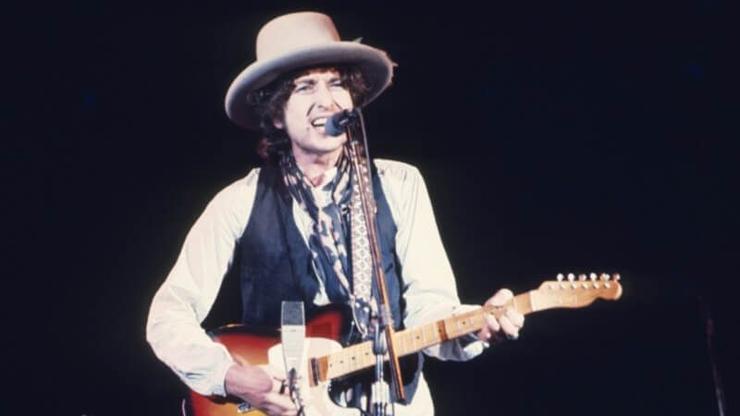
After the Desire sessions, Levy stayed on with Dylan for the barnstorming, carnivalesque tour now known and immortalized as the Rolling Thunder Revue. It was Levy’s task to stage and direct what otherwise appeared to be a spontaneous hootenanny that often ran four hours long. Rivera, along with Stoner and Wyeth, also enlisted in Dylan’s gypsy caravan as the core of his ever-expanding band. Her evolving musical chemistry with Dylan and the wild, longhaired figure that she cut on her electric violin for many embodied the untamed spirit of these intimate shows. Harris returned to her burgeoning solo career following Desire, with Dylan’s old friend Joan Baez and her “Hurricane” replacement, Ronee Blakley, singing her parts as the Revue rumbled along before sputtering out in the spring of ‘76. Levy, Rivera, and Harris would all go on to other creative endeavors, Harris becoming a songwriting legend in her own right. And all have spoken fondly of their brief time with Dylan and their surprising #1 album that still rolls on like thunder half a century later—their collaboration a bolt of lightning that only an artist like Bob Dylan could’ve bottled and, even truer to his nature, immediately uncorked en route to whatever called to him next.