
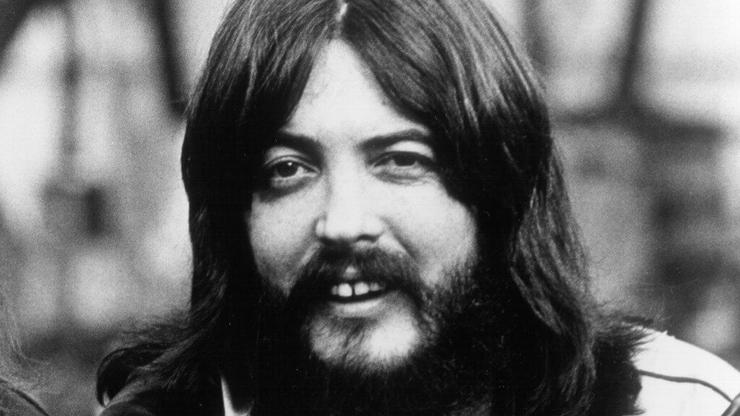
Dash Crofts, one half of the soft-rock duo Seals & Crofts, passed away on March 25 from complications of a heart surgery, his daughter Lua confirmed to TMZ. He was 85 years old.
Crofts was born in Cisco, Texas, in 1940 and met Jim Seals in the late 1950s, when they were both members of the rockabilly band Dean Beard and the Crew Cats. Seals and Crofts relocated to Los Angeles and joined (with Glen Campbell and Chuck Rio) The Champs, whose song “Tequila” was a #1 hit in 1958. Around then, Seals was also a member of Eddie Cochran’s touring band. After stints in failed LA bands, Crofts moved back to Texas while Seals stayed in town and took on a role in the Dawnbreakers. The duo would cross paths again when Crofts returned to California and joined the Dawnbreakers. They were members of the Baháʼí Faith together and started referencing the scripture in their songs. After concerts, they’d talk about their faith on stage and court interested listeners with reading materials.
When the Dawnbreakers were on the outs, Seals and Crofts carried on as a duo and played under their own names, with Seals on guitar, saxophone, and violin, and Crofts on guitar and mandolin. Talent Associates gave them a record contract in 1969 but neither of the albums they made for the label charted well (Down Home reached #122 on the Billboard 200 in 1970). Warner Bros. was interested in the pair and inked them to a new deal in August 1971. Year of Sunday got them back on the Billboard charts, but it was Summer Breeze that made them adult contemporary stars in 1972. The album reached #7 and its title track lead single, featuring the great Jim Gordon on drums, made it to #6 on the Hot 100, becoming Seals & Crofts’ signature tune. Diamond Girl went Gold in 1973, moving 500,000 copies in the US. The title track was a top 10 hit, and “We May Never Pass This Way (Again)” got significant radio play, too.
But Seals & Crofts’ reputation went elsewhere in 1974, when their anti-abortion song “Unborn Child” sparked controversy post-Roe vs. Wade. Despite Warner Bros. Records’ suggestion to shelve the track, the duo believed its message (“Stop! Turn around. Go back. Think it over”) was universal enough to share. “We’re doing this to save lives. We don’t care about the money,” Crofts recounted for Goldmine in 1992. Not everyone got their message, as radio stations across the country banned the song and Seals & Crofts concerts were protested. The accompanying album, Unborn Child, didn’t do wonders for the duo’s career, but they still played to 200,000 people at the California Jam festival with Black Sabbath, Deep Purple, and Earth, Wind & Fire in 1974. The following year’s I’ll Play for You was certified Gold and a greatest hits compilation went 2x Platinum shortly after that.
Between 1976 and their hiatus in 1981, Seals & Crofts made a handful of records, including a soundtrack for Lamont Johnson’s box office sleeper One on One. They had two top 20 hits (“Get Closer” and “You’re the Love”) but failed to ever replicate the popularity of “Summer Breeze.” Seals & Crofts reunited officially in 1989 and toured the US in 1991 before disbanding again the next year. Crofts made a solo album of his own, Today, in 1998, and stayed close to his old bandmate even while their project was on ice. He and Seals couldn’t stay apart creatively for long, and they returned to the studio to make one final record together, Traces, in 2004. A 79-year-old Seals passed away in 2022 from chronic illness.