
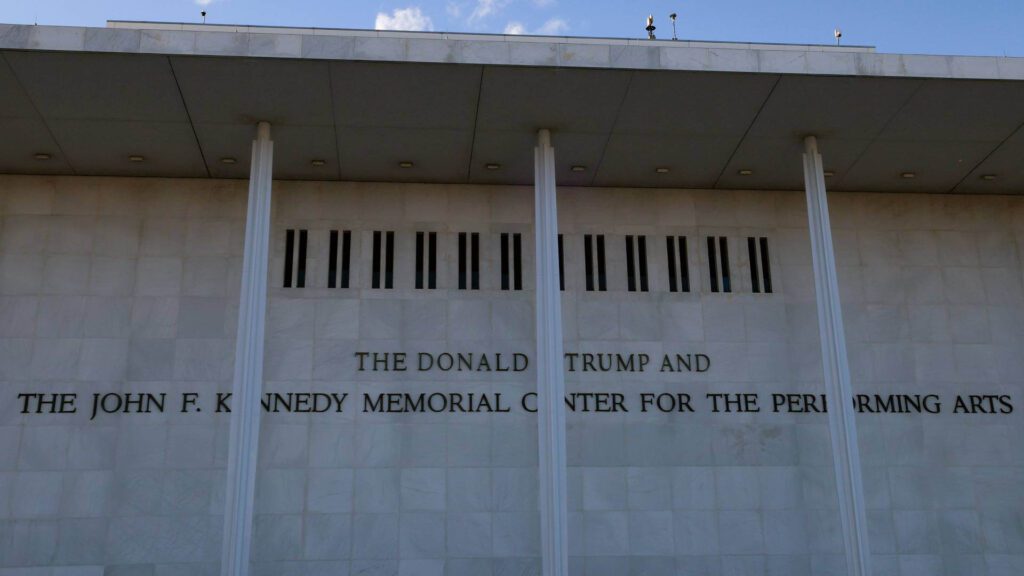
Hey, look: The Kennedy Center would like everybody to know that it broke up with the Washington National Opera, and not the other way around. The Kennedy Center—sorry, that’s The Donald J. Trump And The John F. Kennedy Memorial Center For The Performing Arts, obviously—is doing just fine with this latest split. It’s sorry for the Opera, really; it’d been trying to kick out those long-singing, Viking helmet-wearing weirdos for months, and the announcement yesterday that the opera company would be departing its long-time home at the Center should in no way be understood as part of a larger trend of artists distancing themselves from what was once one of the nation’s most prestigious cultural centers. in the aftermath of Trump taking control and stamping his name all over it.
This is per Variety, reporting on social media posts from routinely apoplectic Kennedy Center president Richard Grenell, who was typically un-calm over circulating reports that the 70-year-old institution—formally designated the National Opera Company by an act of Congress in 2000—had decided to cut ties with the Center. Explaining that his Twitter/X account had apparently been hacked, delaying his ability to be publicly mad for several key “online screaming” hours, Grenell took to social media to post excerpts from emails that did seem to show that he was the one who initiated conversations about ending the long-standing agreement between the opera company and the Center late last year.
Of course, it also feels worth noting that the Washington National Opera managed to navigate all of this with some measure of decorum, avoiding partisan language and framing things as a mutual split when it announced the departure on Friday. Whereas Grenell, once he’d gotten his account back from The Hackers, made sure to claim that the WNO was losing money, and nobody liked it, and who even wants a national opera, anyway? (Or, to quote him directly: “We have spent millions of dollars to support the Washington Opera’s exclusivity, and yet they were still millions of dollars in the hole—and getting worse. Having an exclusive Opera was just not financially smart. And our patrons clearly wanted a refresh.”)