Boy, is it a bad time to be named Casey and also Epstein. Gross! Because, unfortunately for me, Wasserman CEO Casey Wasserman managed to make all parts of my name relevant in one sickening fell swoop.
Wasserman has spent the last few years positioning himself as two things at once: the benevolent power broker behind half of Hollywood’s entertainment infrastructure, and the guy polishing Los Angeles’ halo ahead of the 2028 Olympics. Both versions took a serious hit last week, when newly released Epstein files revealed a string of flirtatious emails between Wasserman and Ghislaine Maxwell—and one of his own artists promptly called bullshit on the idea that this is just an awkward misunderstanding they’re all supposed to swallow and move on from.
The documents, published by the Department of Justice as part of its massive Epstein disclosure, include 2003 emails in which Maxwell, now serving a 20‑year sentence for conspiring with Epstein to sexually abuse minors, jokes about wearing a “tight leather flying suit,” offers massages “that drive a man wild,” and signs off from her private jet. Wasserman responds like a desperate blue-check pornbot on X: “I think of you all the time… So what do I have to do to see you in a tight leather outfit?”; “Where are you, I miss you… can we book that massage now?”; “You, me, and not else much [sic]…” He has not been accused of criminal wrongdoing, and in a statement blasted out to multiple outlets, he insisted he “never had a personal or business relationship with Jeffrey Epstein,” framing the whole thing as an ancient lapse in judgment that predates “[Maxwell’s] horrific crimes” coming to light and noting that his time on Epstein’s plane was a Clinton Foundation humanitarian trip—all claims that both I and Best Coast frontwoman Bethany Cosentino find, to put it mildly, rather unconvincing.
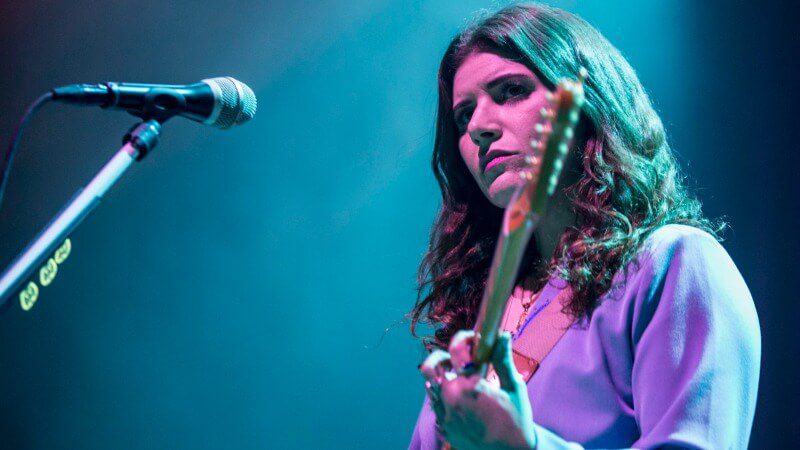
If you work at Wasserman Music—or, more to the point, if your name and face are helping keep its lights on—this is not a theoretical problem. Best Coast has been a Wasserman client since the agency absorbed Paradigm’s music division in 2021, so Cosentino responded yesterday with an open letter that eschews polite concern in favor of a very public refusal to play along. “Ghislaine Maxwell is not a neutral character in a messy story—she is a convicted sex trafficker,” Cosentino wrote, adding that she “did not consent to having my name or my career tied to someone with this kind of association to exploitation.” Wasserman’s statement of “deep regret,” in her framing, doesn’t come close: “Regret without accountability is just damage control,” she argues, “an attempt to move on while the rest of us are expected to sit with the discomfort of our careers being publicly tied to him.”
Cosentino’s demands are concrete. She has asked for her and Best Coast’s names to be scrubbed from the Wasserman website, called for Wasserman to step down as CEO, and said the company should change its name—an implicit acknowledgment that, in 2026, “Wasserman” is not just a logo but a man whose “documented romantic relationship” with Maxwell is now part of the public record. She also draws a line between the agents who grind for their clients and the billionaire whose name sits on the masthead: “I am in the Sam Hunt business. I am not in the Wasserman business,” she writes. Artists, she reminds everyone, are “not interchangeable assets,” and many—herself included—are survivors; asking them to shrug off their agent’s boss sexting a future convicted sex trafficker is not some neutral career compromise, it’s a demand that they “compromise our values in exchange for opportunity.”
The response outside music has been only marginally more diplomatic. L.A. County Supervisor Janice Hahn, who sits on the 2028 Olympics committee, has publicly called for Wasserman to resign from his Olympic post, arguing that having a man whose name is now stapled to the Epstein archive represent Los Angeles “on the world stage” is a distraction the city’s athletes and organizers do not need. UCLA students are asking why a campus dotted with buildings bearing the Wasserman name is suddenly reading about their benefactor’s emails in the same breath as the DOJ’s description of Epstein’s trafficking network. The IOC, predictably, has opted for the “nothing to add” approach—for now.
Wasserman’s defense, such as it is, leans heavily on the passage of time and the absence of criminal charges: this was two decades ago; Maxwell’s crimes weren’t yet “known”; lots of powerful people had some form of contact with Epstein; appearing in the files does not equal guilt. Cosentino’s point is that this is precisely the problem. “We are tired of learning, over and over, that men who control access, resources, money, and so‑called safety in our industry are given endless grace,” she writes. The question isn’t whether Wasserman will be indicted; it’s whether artists are expected, yet again, to nod along while the people who control their touring calendars, festival slots, and paychecks treat “proximity to something horrific” as a minor PR hiccup to weather and then forget.
There is a terrible version of this story in which Wasserman’s statement lands, everyone agrees the whole thing is “unfortunate,” and the machine clicks back into place. Cosentino is trying to write a different one: one where an artist at a big‑three caliber agency looks at the man at the top, at the emails now sitting in a federal database, and says, out loud, that “pretending this isn’t a big deal is not an option.” Whether the rest of Wasserman’s roster joins her is an open question. The fact that someone this embedded in the system is willing to say “these people work for us, not the other way around” in public at all suggests that whatever happens to Casey Wasserman, the old agreement—the one where power brokers get endless mulligans and everyone else gets to swallow the discomfort—might finally be starting to fray. God willing.