
Ten years ago I woke up on December 28th and ran my first half-marathon around a small rural town in the middle of England. It was cold. I didn’t take water. I definitely didn’t stretch. In Newport there is not, physically, 13 miles of runnable pavement in the entire town. So, to get the distance, I ran laps around the graveyard and supermarket car park. I don’t know what possessed me. At 30, I certainly couldn’t do it again. But I do know what motivated me: an acute, screaming, point to prove. I know the music which got me there too.
In the winter of 2016 Floss, Arizona rap-trio Injury Reserve’s second mixtape, had been out for two weeks. On that run, I listened to the entire thing twice. Channelling early Kanye in sound and spirit, Stepa J. Groggs and RiTchie rapped with the fizzing energy of an effervescent pill. On songs like “S On Ya Chest” and “All This Money,” their music was thumping and gleefully boastful, riding on a tide of artists like Chance the Rapper and BROCKHAMPTON whose eccentric, rainbow beats already feel more dated than much older music in 2026.
Unlike early Kanye, Injury Reserve had no Roc-A-Fella co-sign. They were artists of a generation fueled by the DIY-ethic of Odd Future. They made their first mixtape, literally, in a dentist’s office. This context gave their loud ambition stakes, made it tangible and real. For me, it was a beautiful alignment. They rapped like they too had a point to prove. RiTchie dreamt boldly about wearing the suit he wore to his father’s funeral to the Grammys. Their music was good enough that it actually felt possible. Dreaming alongside them made the miles go down easy.
That all feels like a long time ago now. In 2020, Groggs passed away. The album the group released in the wake of his passing—made with his initial involvement and finished as a duo—was a dramatic change of style: chipmunk-soul replaced by blasted-out footwork and towering walls of noise culled from long, improvisatory live-sets. It pushed the group, unexpectedly, closer to sound-artists like Moor Mother and Slauson Malone than their original peers. It was a pivot which channeled a stormy interiority first inspired by the passing of RiTchie’s stepfather but, after Groggs died halfway through, ended up doubling as a treatise on grief performed, in part, by the recently passed. Ghosts go ghost.
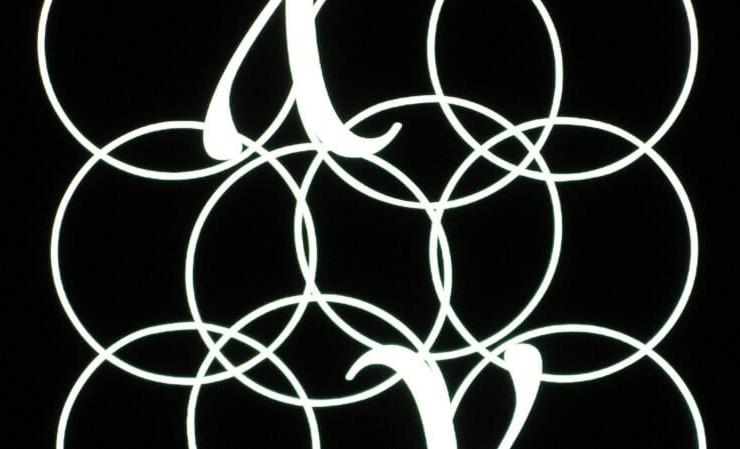
For this record, the first made completely in Groggs’ absence, RiTchie and Parker Corey have left “Injury Reserve” behind them, proceeding instead under a moniker named after the closing song on their last album: By Storm. They look and sound much older now. Corey, once the kind of soft-faced kid who gets ID’d at 35, now resembles an Icelandic noise artist. Where Injury Reserve once made songs about overcoming insurmountable challenges, By Storm have created an album about living with the failure to do so. That’s a far more difficult emotion to articulate, and this is far more difficult music. It would be a lie to say there aren’t vestiges of the old sound here. RiTchie does, after all, still rap. The gentle strings and blue reminiscence which open the album reminds immediately of their weeping 2017 single “North Star,” one of the most devastating rap songs produced this century. As opposed to grins induced by underdog energy though, the joys of My Ghosts Go Ghost arrive through a kind of dumb astonishment instead.
Parker Corey, always a preternaturally gifted producer, proves himself here with masterful work at the brink of hip-hop’s most avant-garde edges. His touch has, against all odds, transformed the group in the way Digable Planets once became Shabazz Palaces, and some of the latter’s strange comic energy appears on My Ghosts Go Ghost, too. Early single “Zig Zag,” for example, begins as a King Krule-chaneling pop song until RiTchie’s voice is swallowed, surreally, by the body of the beat: a true marvel of sound design which leaves us in nothing but a maelstrom of glitching synths and noodling guitar. “Double Trio” is an even wilder trip: deploying bright, squelching, backpack era-horns to stab into chunks of dense, needle-quaking percussion—which suggests that not only has Corey begun to look like Ben Frost, but has started to think like him, too.
It isn’t all blasted noise. “Grapefruit” is tense and slinking: the first time I’ve heard a one-time rap group sound anything like Xiu Xiu and something of a revelation for the band; an unexpectedly freaky turn deployed to needle at fame’s prying hand. “I let them rip me open, they barely blink too,” RiTchie raps, words garbled. “The outside looking something like grey, the inside looking something like grapefruit.” Now as By Storm’s sole vocalist, RiTchie spends a significant proportion of his expanded role ruminating on his standing in the industry, revealing fatherhood on “In My Town” and scribbling raps while delivering fast food to scrape together extra cash: “Here I am delivering eats, writing in the car now for them apps to them streets.” Just as the group’s sound has transformed incomprehensibly, so too has RiTchie’s pen: veering towards the heady blend of absurdity and cold reality which is the speciality of Armand Hammer before billy woods himself pops up on “Best Interest.”
The album ends with an image straight out of GOLLIWOG, too: RiTchie in the basement, trying to summon ghosts of the dead. “It turned out I needed my bro,” he raps. Set against a lilting Spanish guitar, he lights candles and sets the ambience just right. But nothing comes. He’s distraught. Sometimes hanging on to life is, for the living, as difficult as holding onto our memories of the dead. Sonically, tonally, By Storm couldn’t be further from the beginnings of Injury Reserve. Their trials are much harder now than simply winning Grammys and making records, but there are notes of contentment about that, too. My Ghosts Go Ghost ends suddenly, mid-chord: a symbol of uncertainty more fitting for RiTchie and Corey Parker than any other duo working today. A decade on from that slow jog through the frosty graveyard of my hometown, the group formerly known as Injury Reserve have landed somewhere unrecognizable. In their music, as in life, sometimes winning is just taking the next step. [deadAir]
Liam Inscoe-Jones is a fiction and music writer from the UK. His work has appeared in The Quietus, CRACK, The Clash, Rolling Stone UK, Tribune, and The Line of Best Fit. His debut book Songs In The Key of MP3 was released in 2025 on White Rabbit Books.