
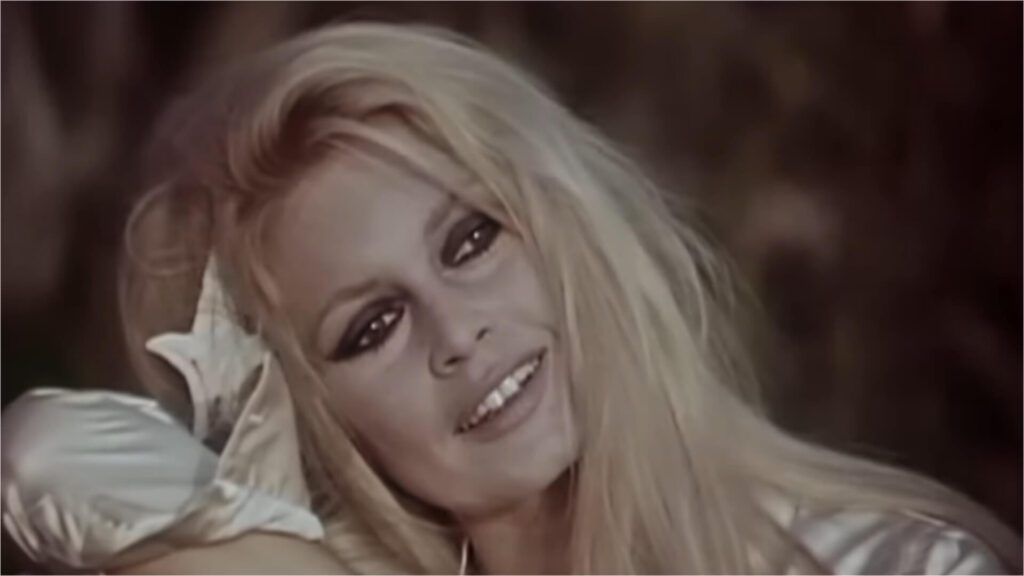
Brigitte Bardot has died. An icon of the sexual revolution in 1960s France, Bardot spent much of her later life as an advocate for animal welfare. The news of her death was confirmed by her foundation, via CNN. “The Brigitte Bardot Foundation pays tribute to the memory of an exceptional woman who gave everything and gave up everything for a world more respectful of animals,” reads a statement from the foundation. “Her legacy lives on through the actions and struggles the Foundation continues with the same passion and the same fidelity to her ideals.” A cause of death was not offered; Bardot was 91 years old.
After coming into international prominence with her role in And God Created Woman in the 1950s, Bardot would go on to become a symbol of changing attitudes and lifestyles during the 1960s. Aside from her film career, which included work with directors Jean-Luc Godard and Louis Malle, Bardot would embark on a pop music career that saw her collaborate frequently with Serge Gainsbourg. In the 1970s, Bardot would largely step away from the entertainment industry to focus on the cause of animal rights. She was also frequently in legal trouble in France for inciting racist hate, often against Muslims.
Born in Paris in 1934, Bardot grew up in a wealthy, conservative, Catholic family. She studied ballet as a child and, at age 15, appeared on the cover of Elle magazine. It wasn’t long before she began appearing in films; 1952 saw her appearances in Crazy For Love, The Long Teeth, and Manina, The Girl In the Bikini. Her international breakthrough came with the 1956 film And God Created Woman, which firmly established Bardot as a sex symbol. “Clearly viewing female sexuality as a force only marginally less dangerous than the hydrogen bomb, …And God Created Woman is an awful film full of stilted dialogue, egregious sexism, and ugly racism,” wrote Nathan Rabin for this website in 2002. “But as a depiction of post-war masculinity attempting to come to terms with a new breed of woman, it’s a historic bit of pop-culture sociology.” Bardot would appear in films consistently throughout the 1960s, with some of her especially notable roles coming from Godard’s Contempt and Malle’s Viva Maria!
At the same time, Bardot embarked on an influential musical career. After appearing on the soundtrack for And God Created Women, Bardot began releasing solo albums in 1963, which often saw her work with songwriter Serge Gainsbourg. In 1968, Bardot and Gainsbourg would release an album together, Bonnie And Clyde, which may be her best-remembered musical work. Together, the two filmed some clips for their songs, which may now be considered proto-music videos. The title track from the album is perhaps Bardot’s best-known song internationally and has appeared with some frequency in other media, including Mad Men and A Simple Favor.
[embedded content]
Bardot mostly gave up on acting and singing in 1973, focusing instead on animal welfare. According to her foundation, Bardot first began speaking in support of animals in 1962 when she publicly demanded that animals be rendered unconscious before being slaughtered. The activism continued throughout the rest of her life; in 1977, Bardot was photographed protecting seal pups, and in 1984, Bardot was credited with saving two horses from a slaughterhouse. The campaign against eating horse meat was a particular fixation for the former actress, as was the campaign against slaughtering animals for religious sacrifice. Bardot also spoke out against hunting dolphins and against bullfighting.
But the activism for animal rights often veered towards racism, and Bardot was fined and convicted in France multiple times for inciting racial hatred. In her 1999 book, Bardot criticized slaughtering sheep for the Muslim holiday Eid al-Adha and complained “…my country, France, my homeland, my land is again invaded by an overpopulation of foreigners, especially Muslims.” She was fined for the comments and was in court over similar issues five times between 1997 and 2008. Bardot was also critical of the #MeToo movement and, per The New York Times, supportive of France’s right-wing National Front.