Many institutions try to play God, but most of them just end up with horrible taste. I find that to be especially true about the Rock and Roll Hall of Fame, music’s cringy and deeply vain cathedral of awarded immortality. 30 years ago it probably meant something to be enshrined in there—to be indexed as one of the most important participants in your vocation. But there are more geniuses outside the Rock Hall than in it—Boston, Devo, Brian Eno, Iron Maiden, the Meters, New York Dolls, Thin Lizzy, and War… just to name a few. I’ve only cared about the induction ceremony once, when Nirvana got added to the hallowed halls in 2014, at a time when my Nirvana obsessions were peaking. Maybe my dislike of the Rock Hall comes from growing up near it: In my youth, it became a tourist trap weaponized against out-of-towners, in an effort to convince them that, yes, Cleveland is actually a cool place to visit.
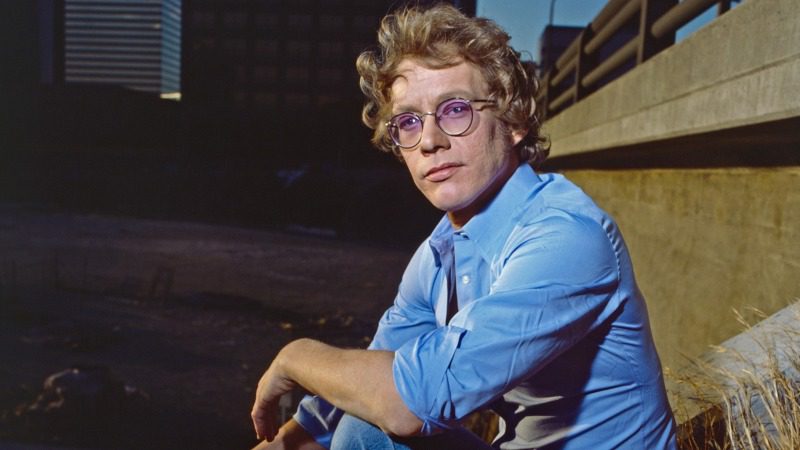
The Rock and Roll Hall of Fame induction ceremony doesn’t register as anything more than an ass-kissing parade for artists deemed eternal by “music industry professionals”—can’t-hack-its who’ve been given the keys to the car yet can’t see over the steering wheel. It’s one step above buying yourself a star on the Hollywood Walk of Fame: more phony than prideful. And every year the Rock and Roll Hall of Fame announces its nominees, and every year we air out our grievances about them online. That artist was snubbed, this artist doesn’t even make rock music. It’s all about as effective as groveling over Alan Trammell’s inclusion in Cooperstown. Who gives a shit? The Tigers still suck. But I do think that, until this past Saturday night, the Rock Hall’s omission of Warren Zevon was a sore, glaring mistake. They’re still a sorry-ass institution now that they’ve inducted him, just a little less so.
Warren Zevon is one of the greatest songwriters of this life and the last, even though he only released three albums after mine started. But I believe in his relevance even more now that I live in Hollywood and know all the spots he’s singing about in “Carmelita.” After you’re done playing AC/DC-themed pinball and listening to dead-eyed employees sing karaoke with restless, sticky children, you’ll be able to walk into the Rock Hall’s room of shiny, engraved walls and put your thumb on Zevon’s name. To quote the man himself, the shit has hit the fan. I don’t live in Ohio anymore. If I did, I probably wouldn’t use my free will to go to the Rock and Roll Hall of Fame anyway. But there is a part of me that is grateful for that building—designed by I.M. Pei, who also designed the Louvre pyramid—and the artifacts of Zevon’s life that it may soon hold. I’ve found my own way to honor him here in Los Angeles, by playing his records on the streets I’ve grown quite fond of, after the night’s touched down and the rainbow lights reawaken. You don’t need to buy a map to the stars when the songs on Warren Zevon or even Bad Luck Streak In Dancing School can take you anywhere you’d like to go.
William Mulholland’s road threads the ridgeline of the Santa Monica Mountains. From one side, a vista overlooks the San Fernando Valley. On the other, the Los Angeles Basin depresses, revealing a splash of skyscrapers on a smudgy horizon. David Lynch said you can “feel the history of Hollywood” on its path. That seems true enough about “Backs Turned Looking Down the Path” and “Desperados Under the Eaves,” because myth makes the ordinary’s story worth hearing. I am on Mulholland Drive frequently enough, when I’ve quit craving its winding passages and sharp, elbowing turns, and when I’ve quit dreaming about its houses on the hilltop, and just go there.
[embedded content]
My partner says she’s glad the canyon roads still fascinate me like this. As long as I remain open to what’s possible along them, and as long as there is a statue of Houdini there to welcome me onto Laurel Canyon Boulevard, then there is magic to check up on. I moved to this city so I could love her with my whole, present self. Sometimes she lets me take the long way home after our errands and play “Join Me In L.A.” all the way through. I am romantic about a commute, laughably so in a town that telegraphs its traffic into a grotesque math equation. But I’ll be damned if those guitar moves don’t fill me up as Mariposa turns into Finley, when a warning shot turns into a sentimental lament (“They say this place is evil, that ain’t why I stay. ‘Cause I found something that will never be nothing”). “Excitable Boy” comes up in the queue but she skips it. California’ll fall into the ocean before that one makes it past the first note in her car, so I let Linda Ronstadt and Jennifer Warnes’ phantom harmonies come into my dreams instead.
Zevon’s history fit with the iconography of the times. Well, maybe only at first. In chapter one, he’s a bookie setting up dice games for Mickey Cohen in Los Angeles. He goes by the name Stumpy, like he’s a pulp novel B-character, or something. In chapter two, Zevon studies classical music under Igor Stravinsky. Eventually he flings himself across the country to New York City, where he catches a rap as a session man and jingle composer, penning tracks called “Like the Seasons” and “Outside Chance” for the Turtles. One of his songs even gets re-recorded by Leslie Miller for Midnight Cowboy in 1969. A debut album comes a year later and Zevon takes on some gig work touring with the Everly Brothers as a keyboard player and music coordinator before briefly living in Spain, where he and mercenary David Lindell compose “Roland the Headless Thompson Gunner” together at the Dubliner Bar in Sitges.
But all that got tired quickly and, at Jackson Browne’s behest, Zevon returned to Los Angeles in September 1975, bunking with Stevie Nicks and Lindsey Buckingham. He got to know the Eagles and Bonnie Raitt and Linda Ronstadt and Carl Wilson and Ned Doheny and JD Souther and Waddy Wachtel, and then he asked them all to come play on a record he was making at Sunset Sound with Browne. And they did. Before then, Zevon was plowing through women, acid, and hooch. He had a son but didn’t see him much and, at the Hollywood Hawaiian hotel, Zevon escaped through a window when he was too broke to cover his stay during a bender. The songs he started coming up with—philandering postcards of failing marriages; violent love affairs with vodka; back-alley rampages by gun-toting, flight-risk cowboys and lowlifes—came dressed in bizarre perspectives Zevon wanted us to view them through. It was a fascinating beat for a guy all hopped up on Béla Bartók suites. Or maybe it wasn’t. He was Hunter S. Thompson in a valley full of Faulkners, giving you every ugly detail yet remaining unknowable.
Warren Zevon sold horribly in 1976 but made the man himself something of a provocative, outré songwriter in a period of adult-contemporary FM radio slop. To boot, the record’s tales of destruction and hedonism didn’t land too far away from the truth of Zevon’s own antics. He beat on women, cast friends and business partners aside, nearly killed himself with his own hands and the drinks they clutched. Legend has it he was a gun nut who liked firing off rounds indoors. And don’t get me started on his finances, which were massacred before he even returned to Hollywood. They were the “good old, bad old days,” so to speak—not immediately the “type” of music that a committee would deem “hall of fame-worthy.” But the Rock and Roll Hall of Fame ain’t much of a barometer for a legacy these days, especially Warren Zevon’s. I’d have inducted him for his 5-night stand at the Roxy in August 1980 alone, when he finally got sober and felt compelled to start doing flying backflips off the top of his piano and ad-libbing “the Ayatollah has his problems, too” during “Mohammed’s Radio.”
I had to discover Warren Zevon by association, after watching the “Smooching and Mooching” episode of Freaks and Geeks. Or maybe it was after hearing Kid Rock’s sample of it in “All Summer Long” while riding the school bus. Crunchy, barroom rock songs about killing, drugging, and gambling weren’t on too many MySpace profiles back then. Zevon’s life wasn’t textbook or all that pretty, and the folklore of his music is more fucked-up than it is fabled. I do not know if the Rock Hall plans to tone down his centennial-era, mutineer escapades in their shoreside sanctuary, because nobody could ever truly cage the kind of humor he was peddling between the margins of those deeply depressing, sometimes mean-spirited ideas, but I’m thrilled to know that, now, a kid or two might get to find him easier than I did.
[embedded content]
And I’m still looking for him. Or maybe I’m just passing through him. Like, shit, man, I know where Gower Avenue is! I drive by his old WeHo apartment building all the time. If I walk a couple streets over from my home, I can see the Hollywood sign through some palms. And I know that somewhere beneath those letters is a room he rented for a second, before his son was born and before Linda Ronstadt and JD Souther moved in. This town’s full of ghosts, but you’ve gotta stick your toes in the Pacific Ocean to get a piece of Warren Zevon. Yet I still hit the roads with “Mohammed’s Radio” blasting out the sunroof. Then: a glimpse of some freaks smooching at the curb while their friends take pictures of a distant Griffith Observatory. Don’t it make you wanna rock and roll all night long?
The funny thing is that, for a long, long time, the only Warren Zevon song I cared about or claimed to know was “Werewolves of London,” because it was the only Warren Zevon song my dad ever listened to. I loved that raggedy old dance tune and so did a lot of other folk, its bounce impressing enough dial-flippers to crack the Top 40 in 1978. But then I watched Judd Apatow’s Funny People in college and heard “Keep Me In Your Heart.” It shatters you, witnessing the guy who constantly cheated death finally accept its certainty. But the end of Zevon’s life allowed me to collapse into the 30 years that preceded it. Hearing a couplet like “Well, I’m sittin’ here playing solitaire / With my pearl-handed deck” means few other songs written in the English language will ever satisfy you the same. I had one foot in the door of girlhood and the other in “Tenderness On the Block,” finding peace in Zevon’s macho-wacho, winking vignettes of booze-stinking tragedy.
Zevon was a career suicidist with a shit-hot pen. It’s too bad that the pen didn’t always work. He wrote the greatest closer of all time (“Desperados Under the Eaves”) and dropped it on the same record as a hackneyed song like “Hasten Down the Wind,” which only sounded great when Linda Ronstadt covered it. Zevon drank and drank and drank and could never just put out no-fuss bullshit. Imagine early ‘90s Dylan but, like, all the time. How are you gonna write a lyric like “I caught a glimpse of you, and your face looked like something death brought with him in his suitcase” and then send “Let Nothing Come Between You” to get mastered? Zevon’s edges were much rougher than those of his mellow-mafia associates. Jackson Browne and the Eagles and Fleetwood Mac were all far more successful than him, armed with enough chart-toppers to justify their catchy, if not innocuous melodies, but they were never the kind of rock star he was. I’m still trying to figure out if I mean that as a compliment.
But, hey, if Ringo Starr can get into the Rock and Roll Hall of Fame as a soloist then they should be inducting Warren Zevon three or four times over! Even though many of his records are just so-so, if not totally frustrating to sift through, he wrote about all of the things I’ll never be but live among. He sang about the addicts and the two-bits, the whores and the sidemen. His portrait of Hollywood ain’t dead; the demimonde just wraps its nights up much earlier now. Not too bad for a guy who once made ends meet by singing ditties for Chevrolet. I love his songs and I like humming them with my girl while we hitch ourselves up and down these busy LA streets, where the poetry of our lives bounces off all the billboards. Under the banner of Zevon’s wickedness, I feel complete in my own meekness. And if there’s an enterprise out there willing to say that all of that is worth remembering and pin a medal on it… well, then that sounds all right to me. While inducting his old friend into the Rock and Roll Hall of Fame on Saturday, after more than 30 years of eligibility, David Letterman reminded us of Warren Zevon’s final wisdom: “Enjoy every sandwich.” Five years ago, I thought saying a thing like that was pretty goofy. But five years ago I thought that moving across the country for love was pretty goofy, too. Now I know that some things are just worth savoring.
[embedded content]
Matt Mitchell is Paste’s music editor, reporting from their home in Los Angeles.